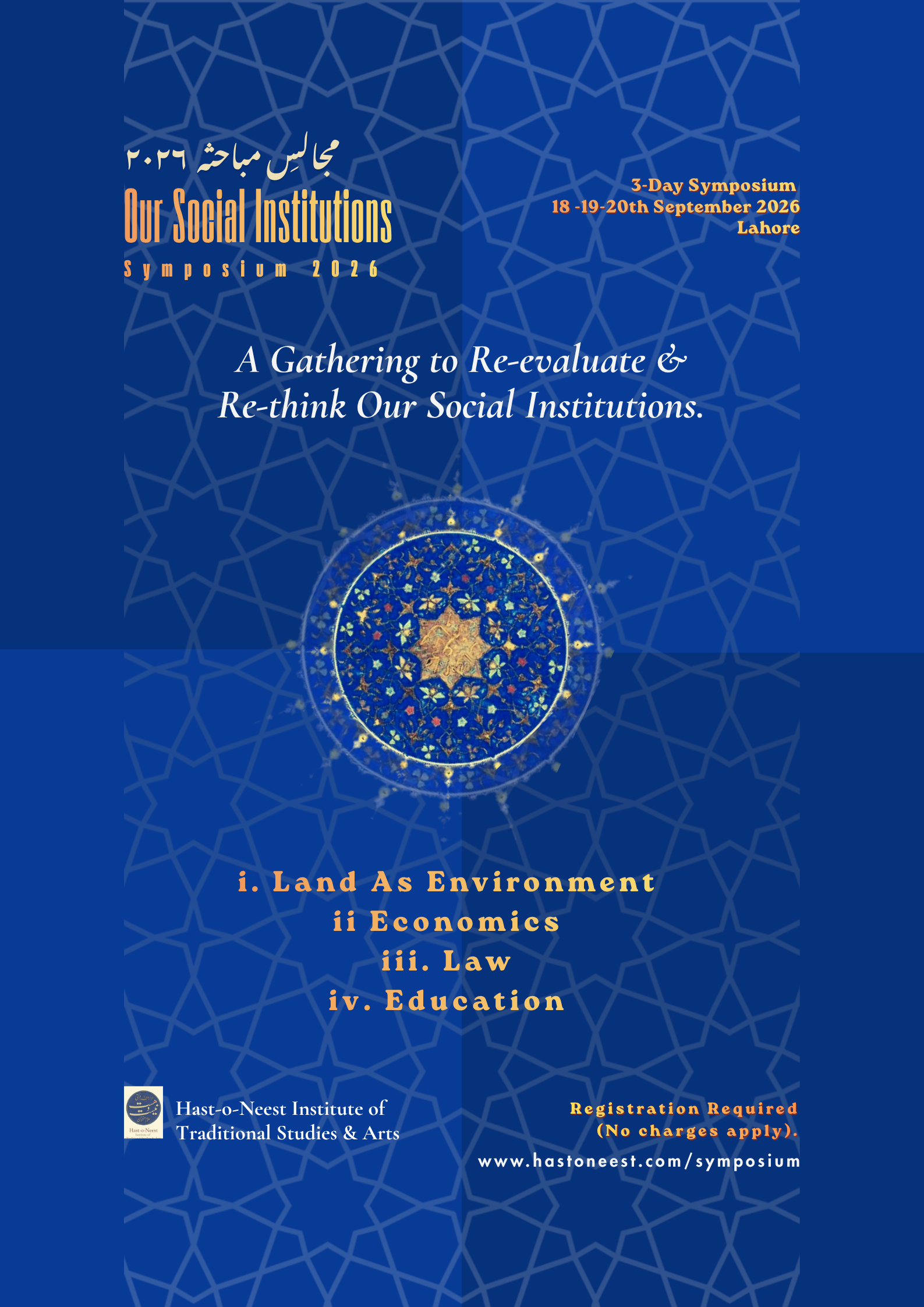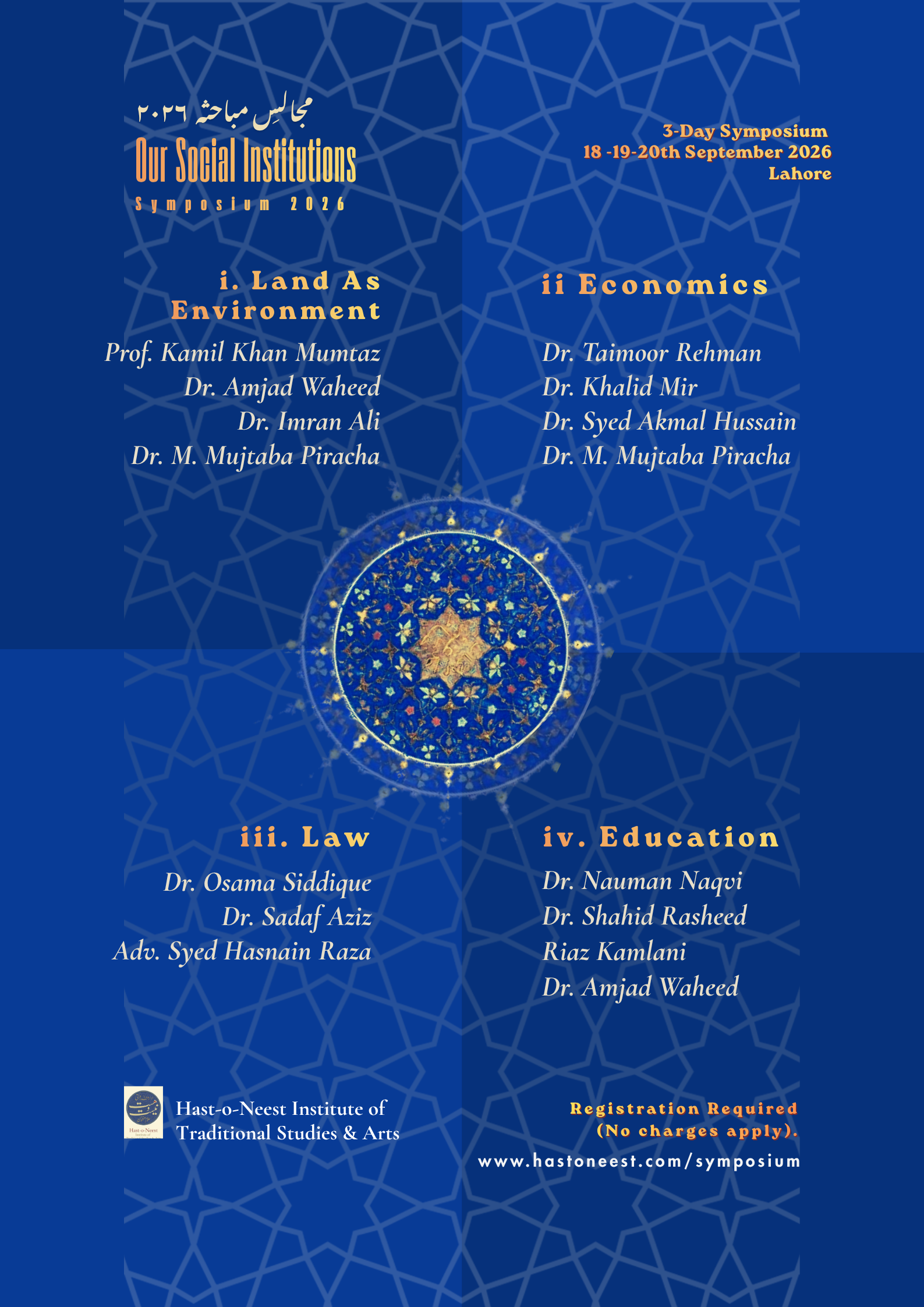
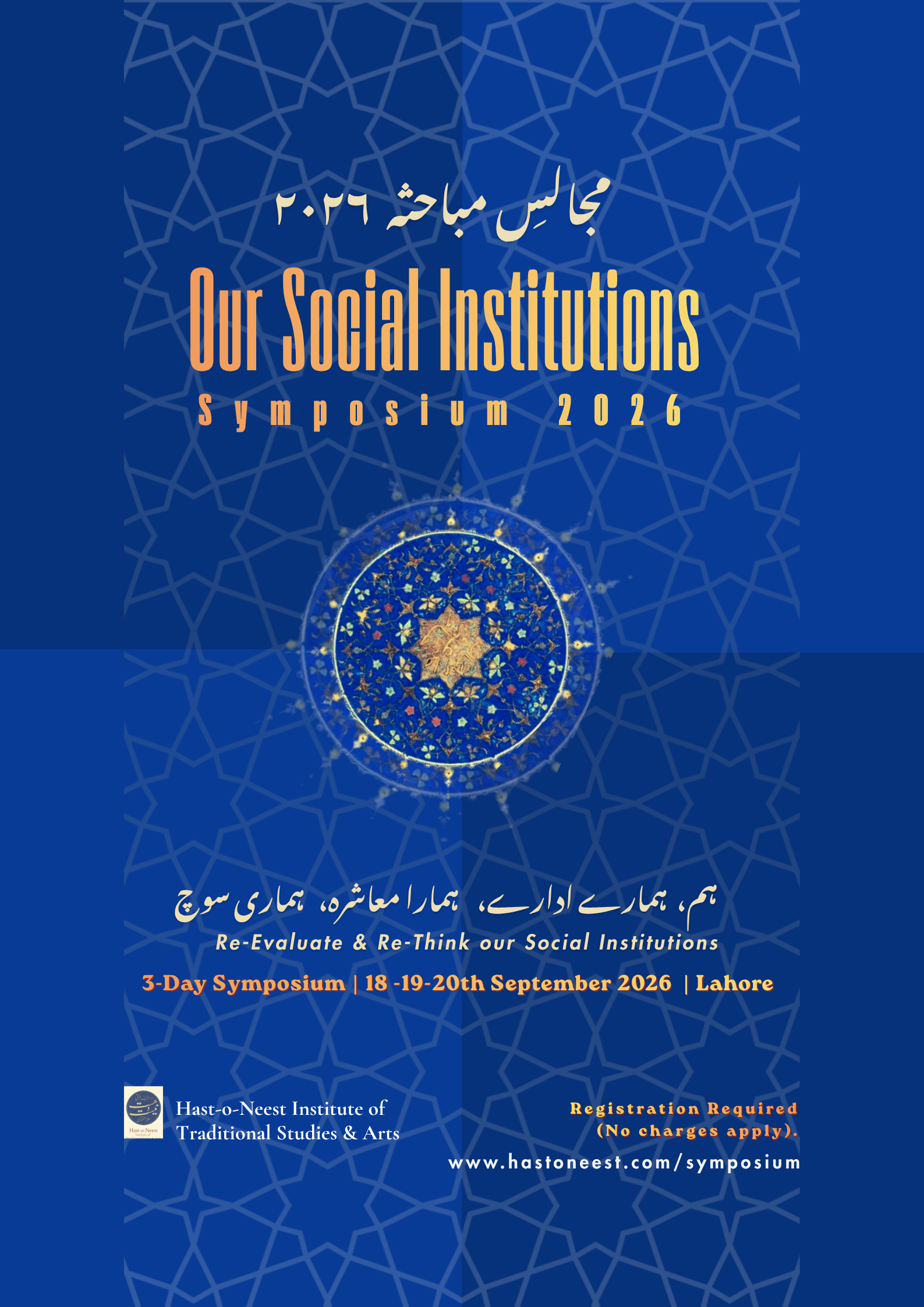
Social Institutions Symposium 2026 مجالسِ مباحثہ ۲۰۲۶
18-19-20th September 2026, 14th Floor, High Q Tower, Jail Rd, Gulberg V, Lahore.
ہم، ہمارے ادارے، ہمارا معاشرہ، ہماری سوچ
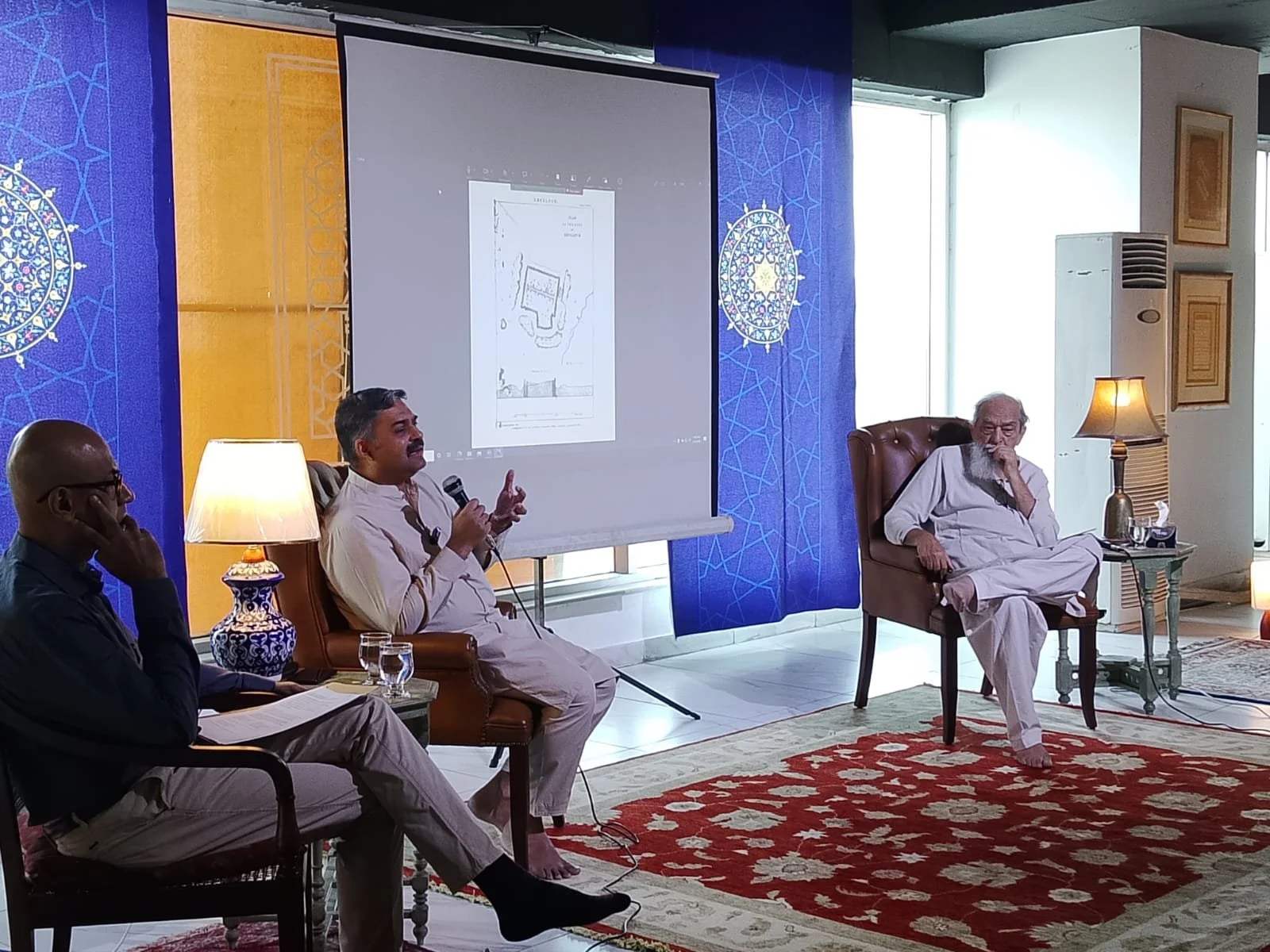
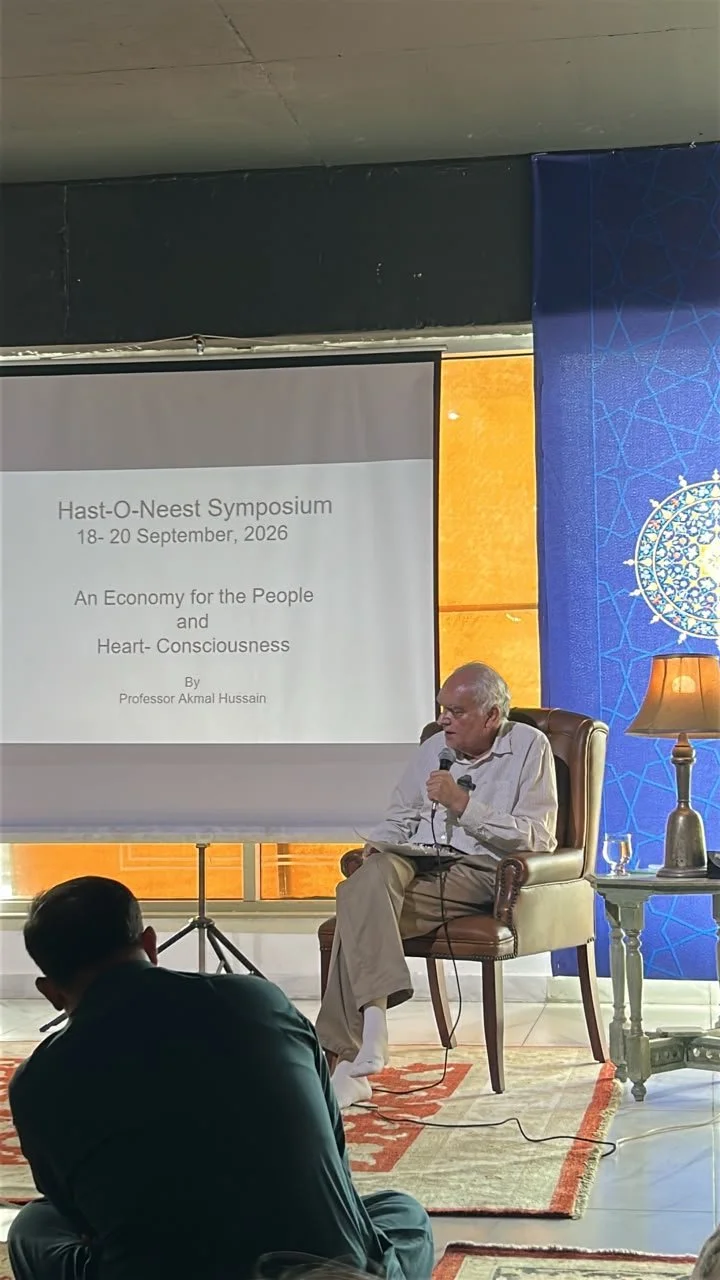
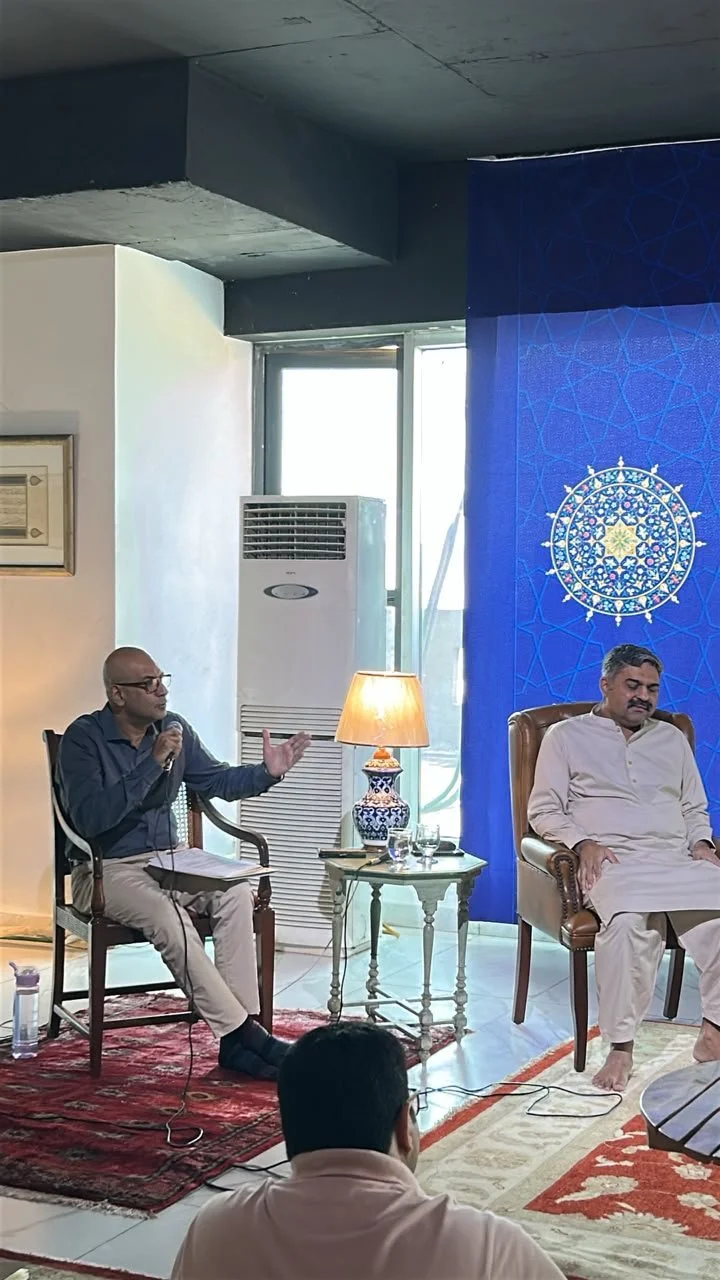
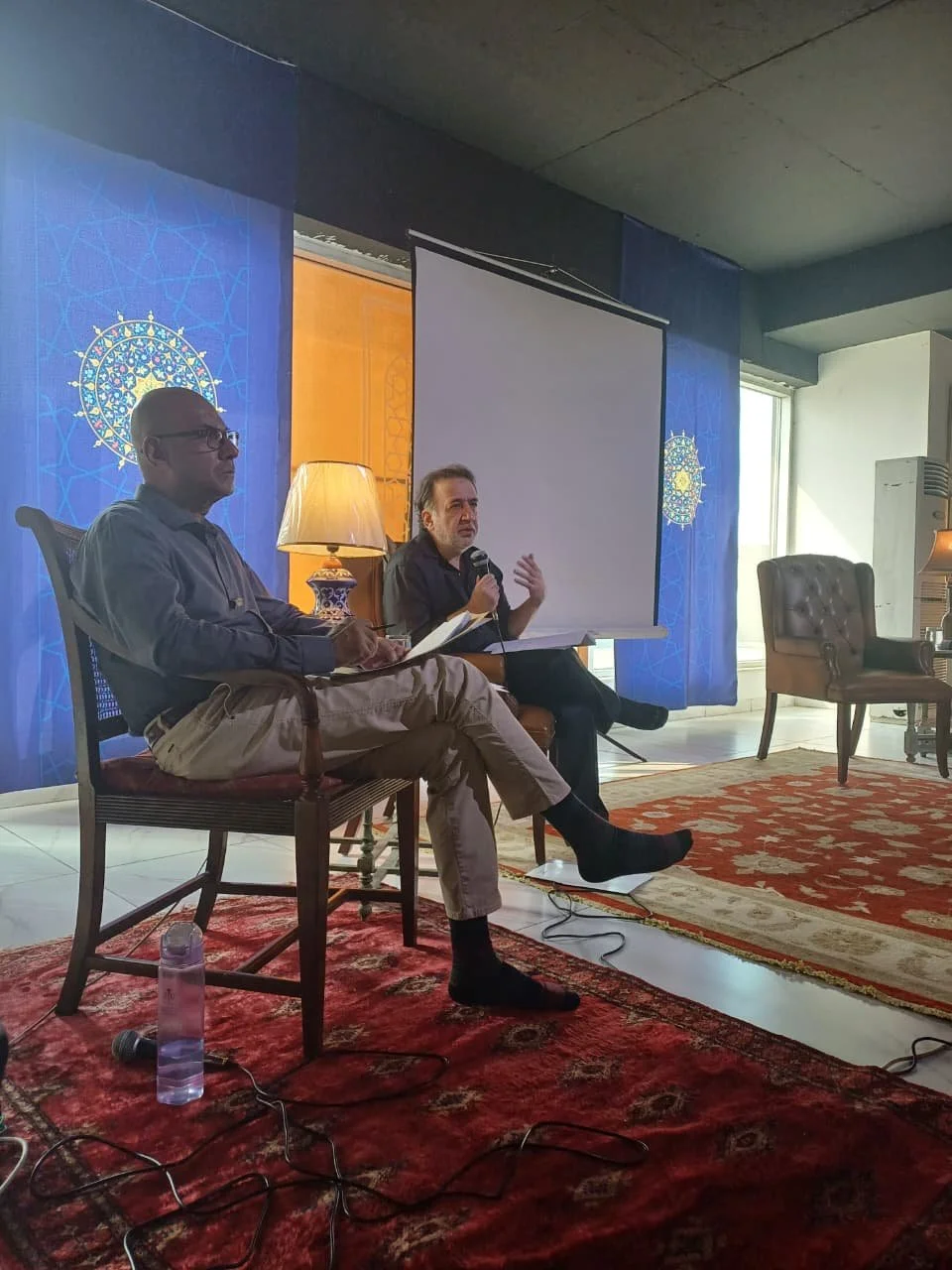
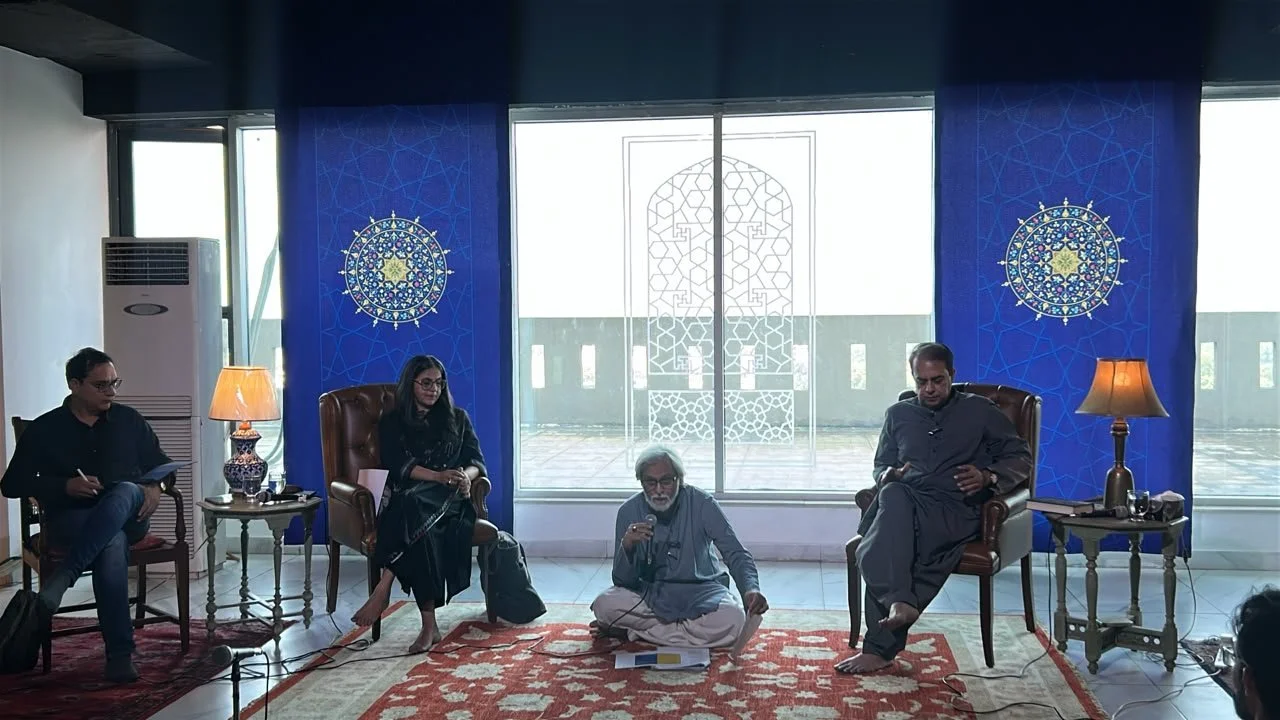
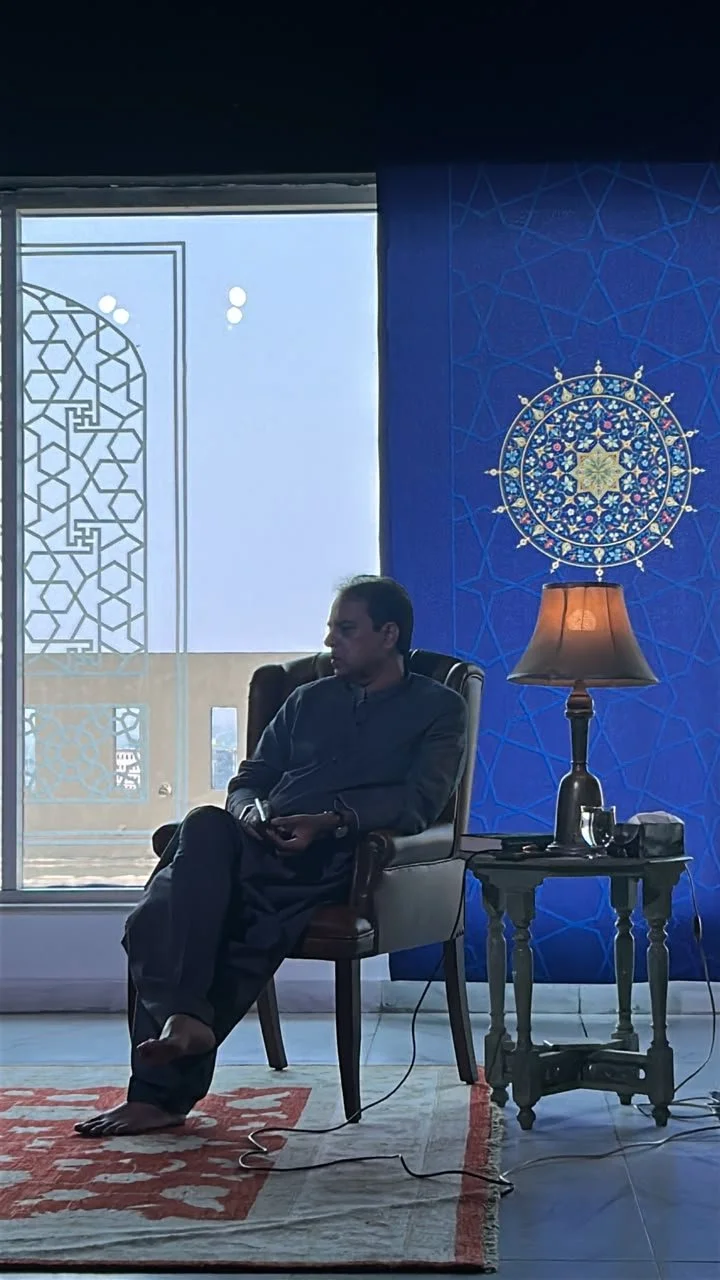
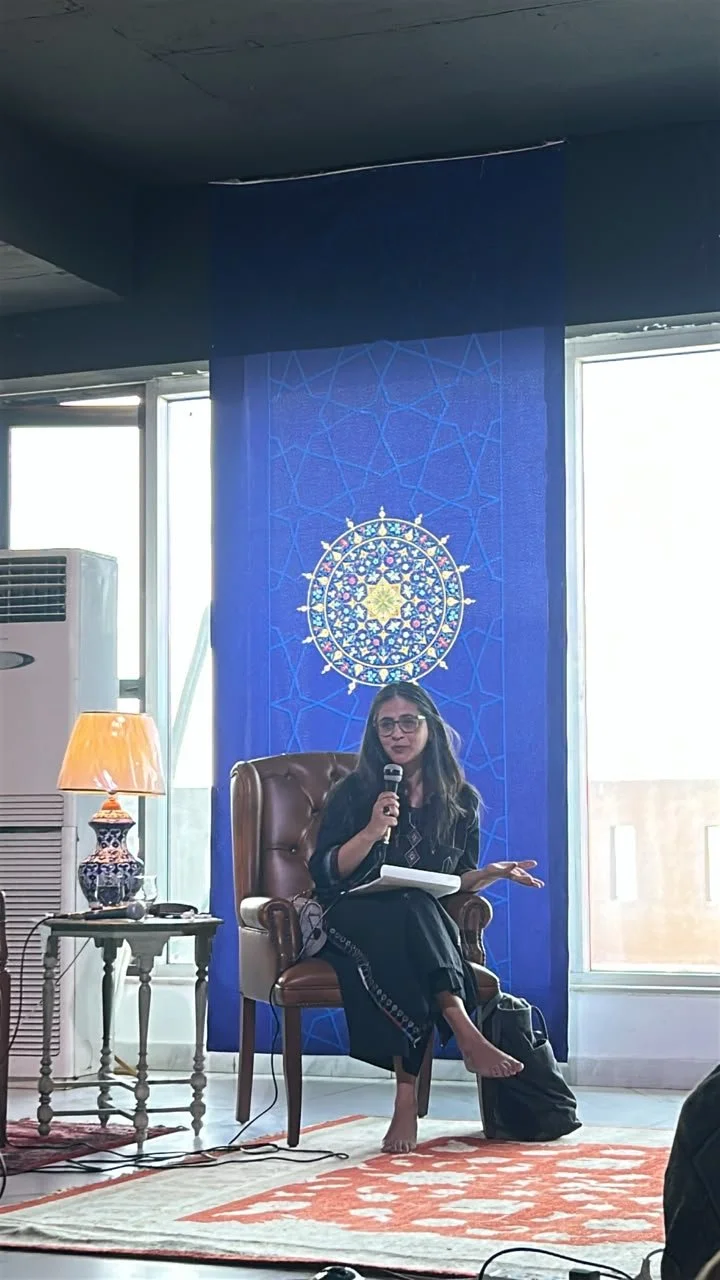
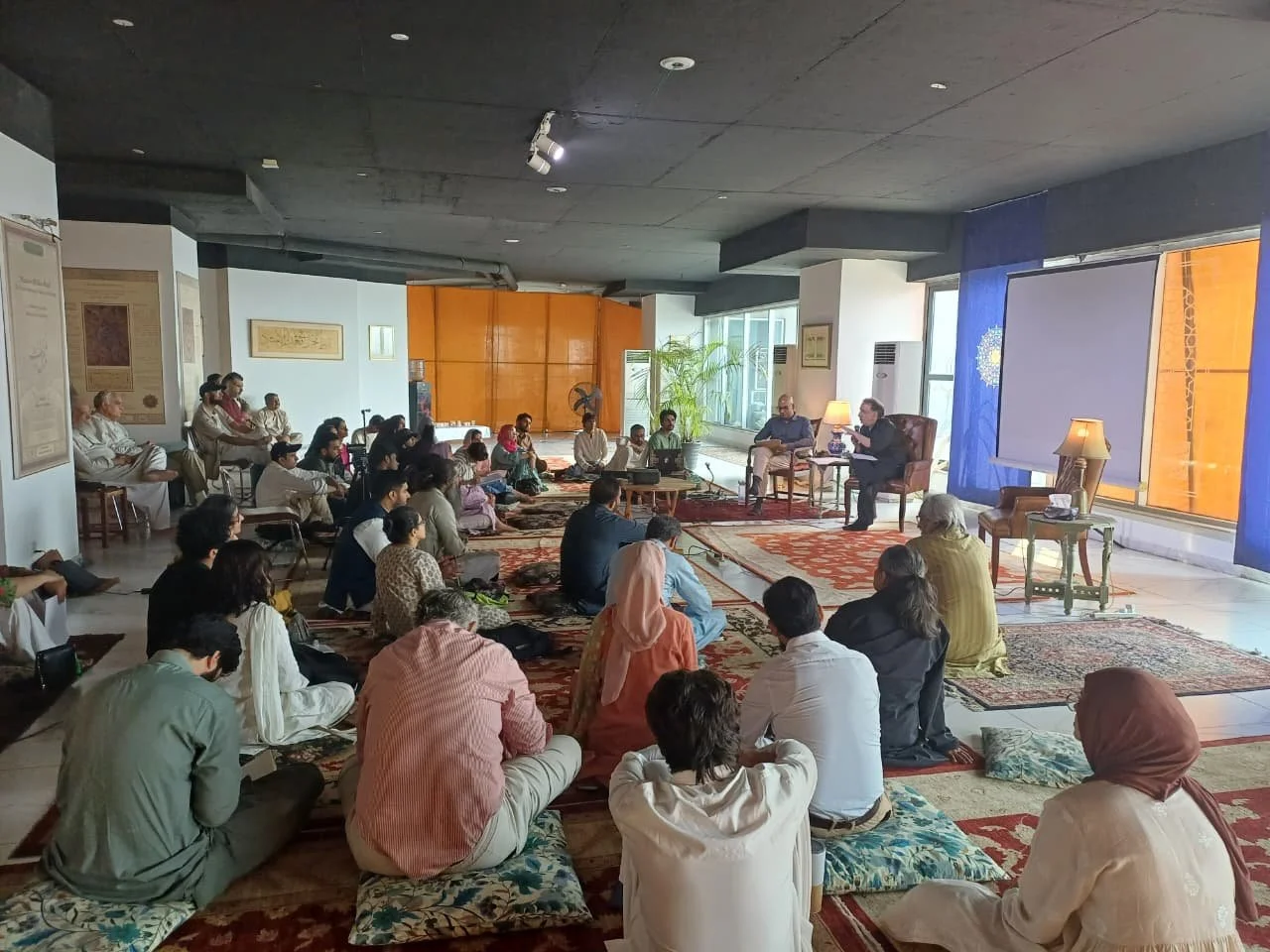
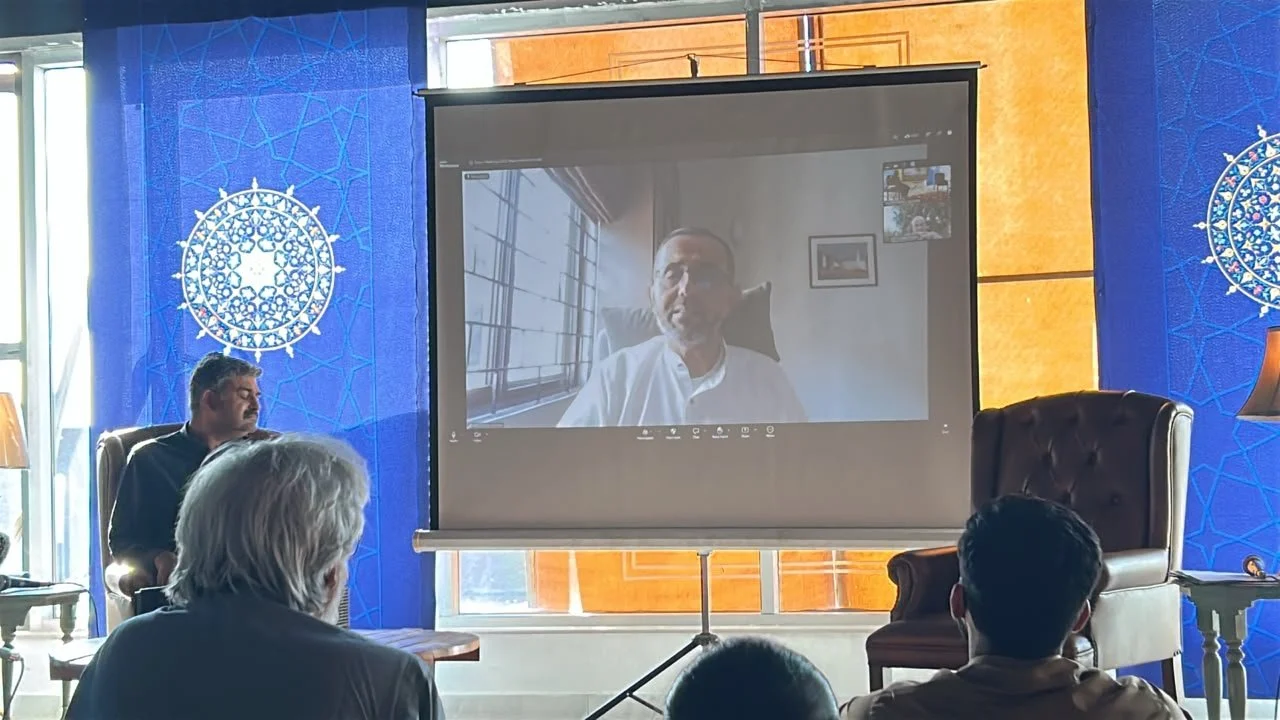
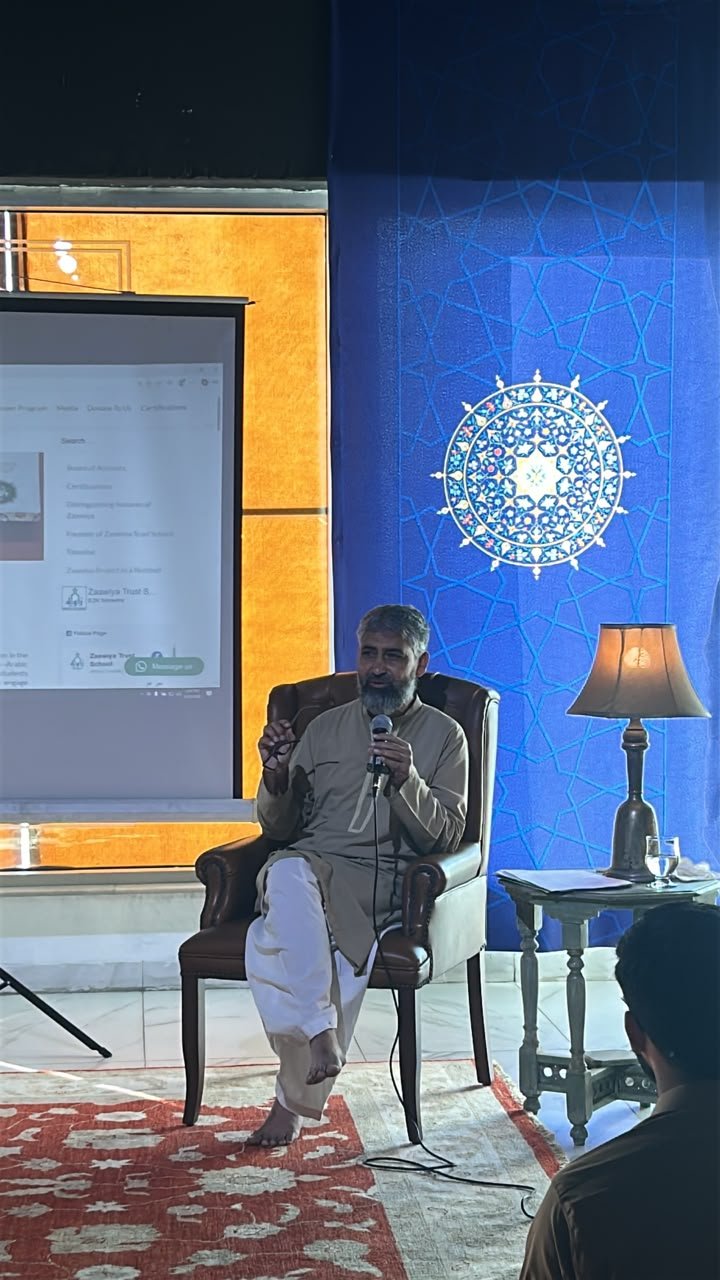
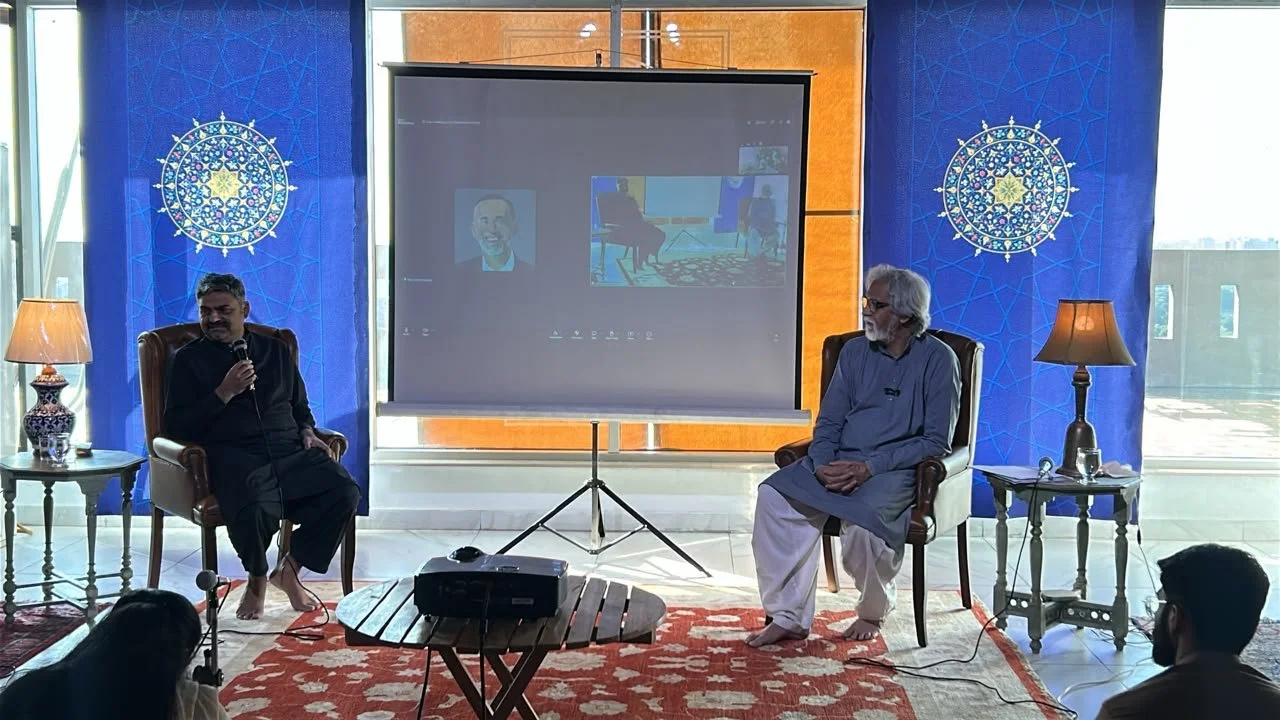
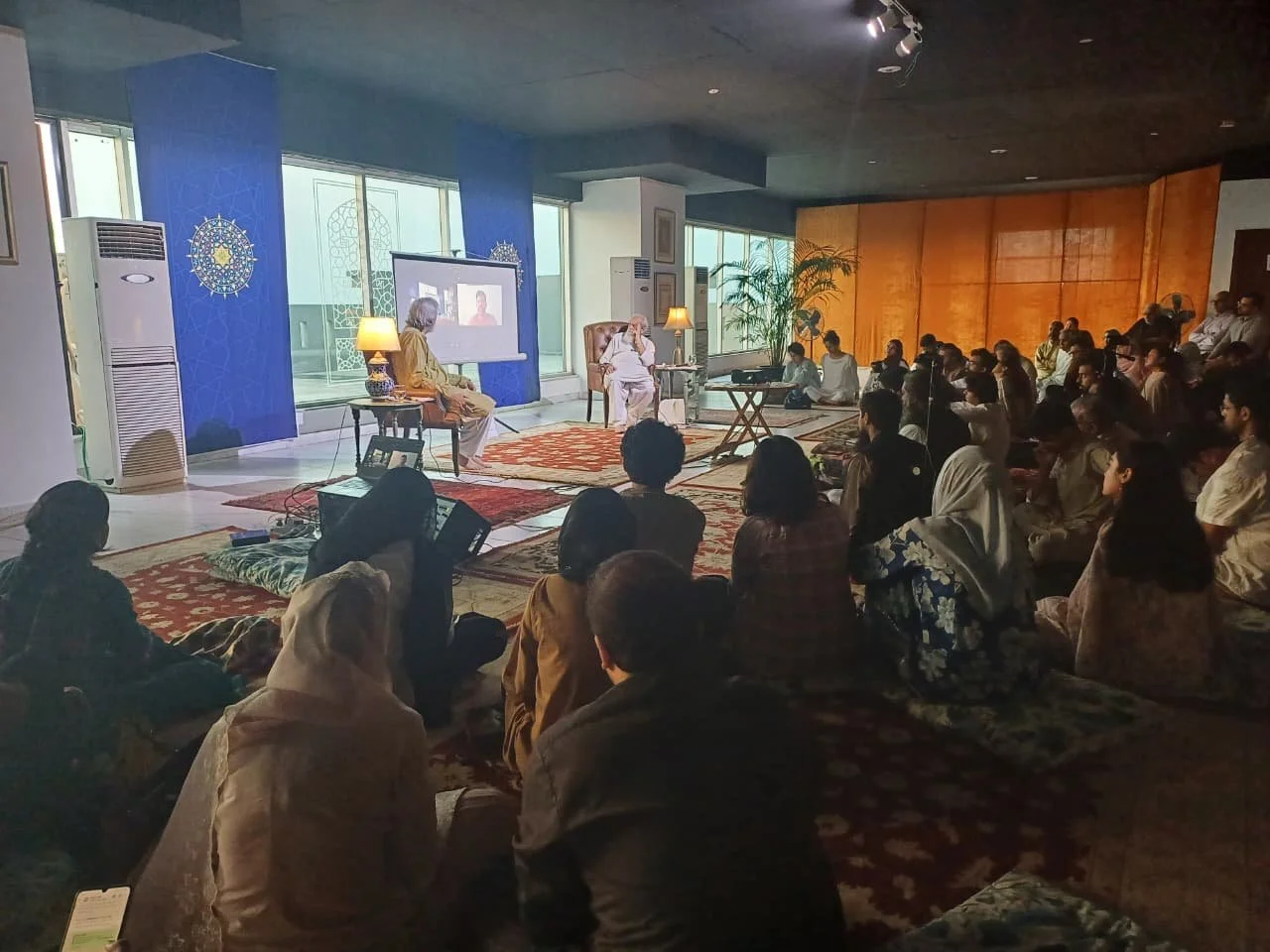
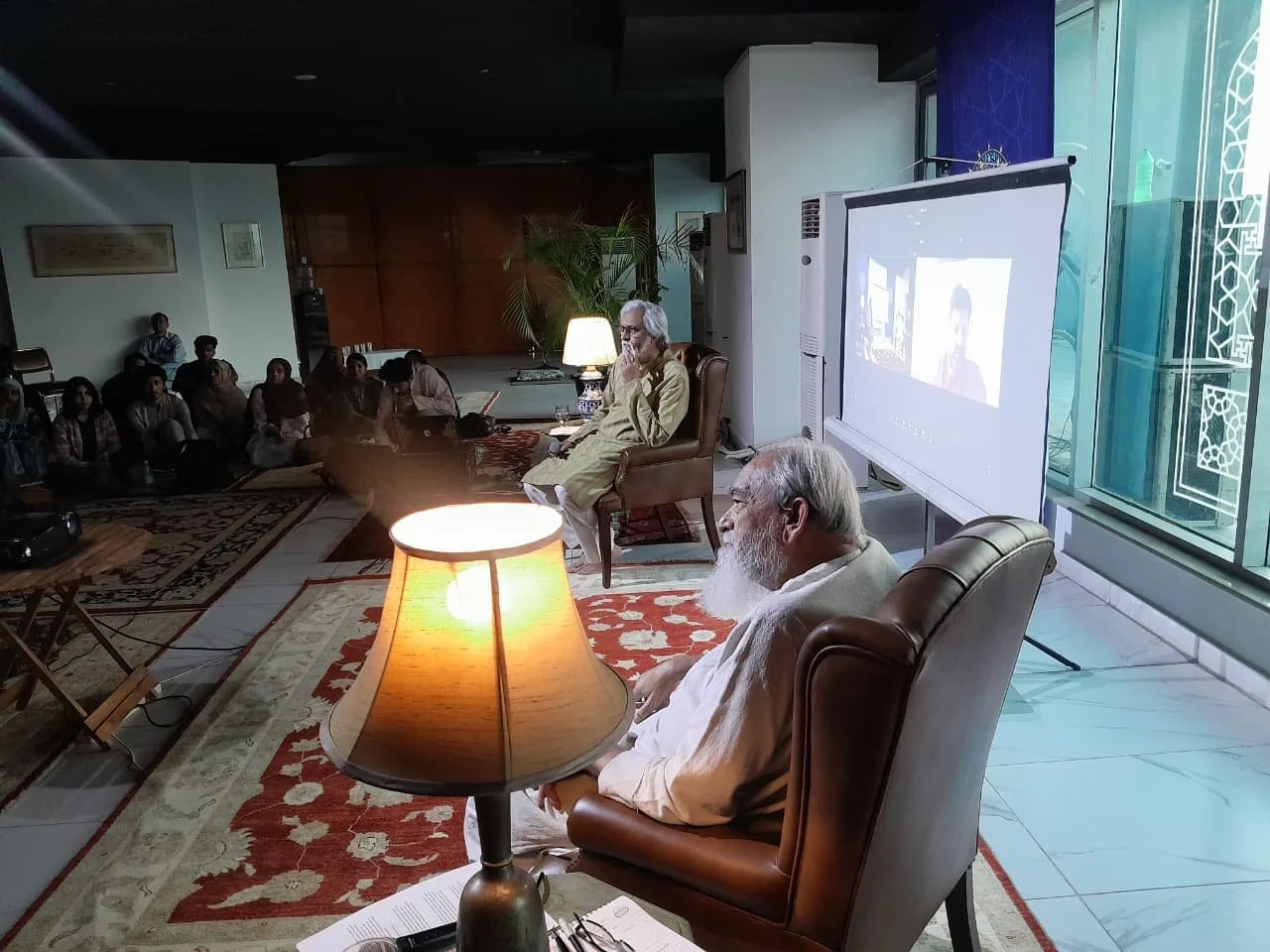
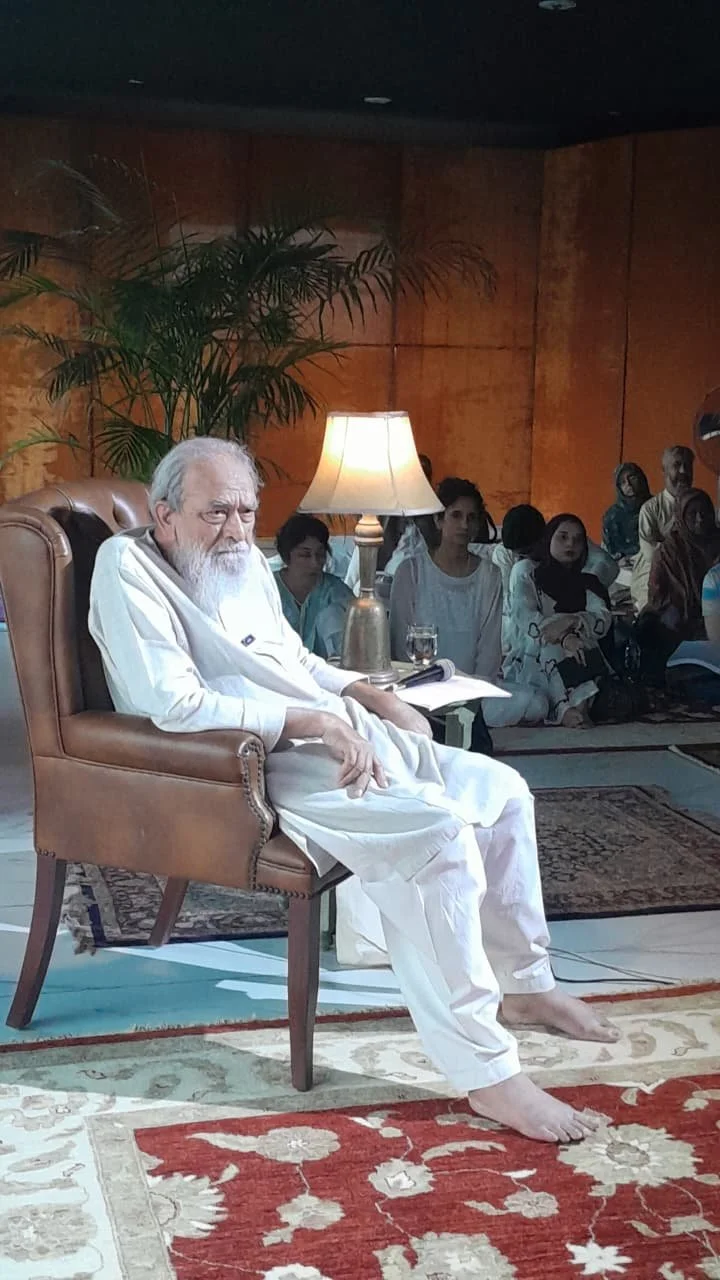
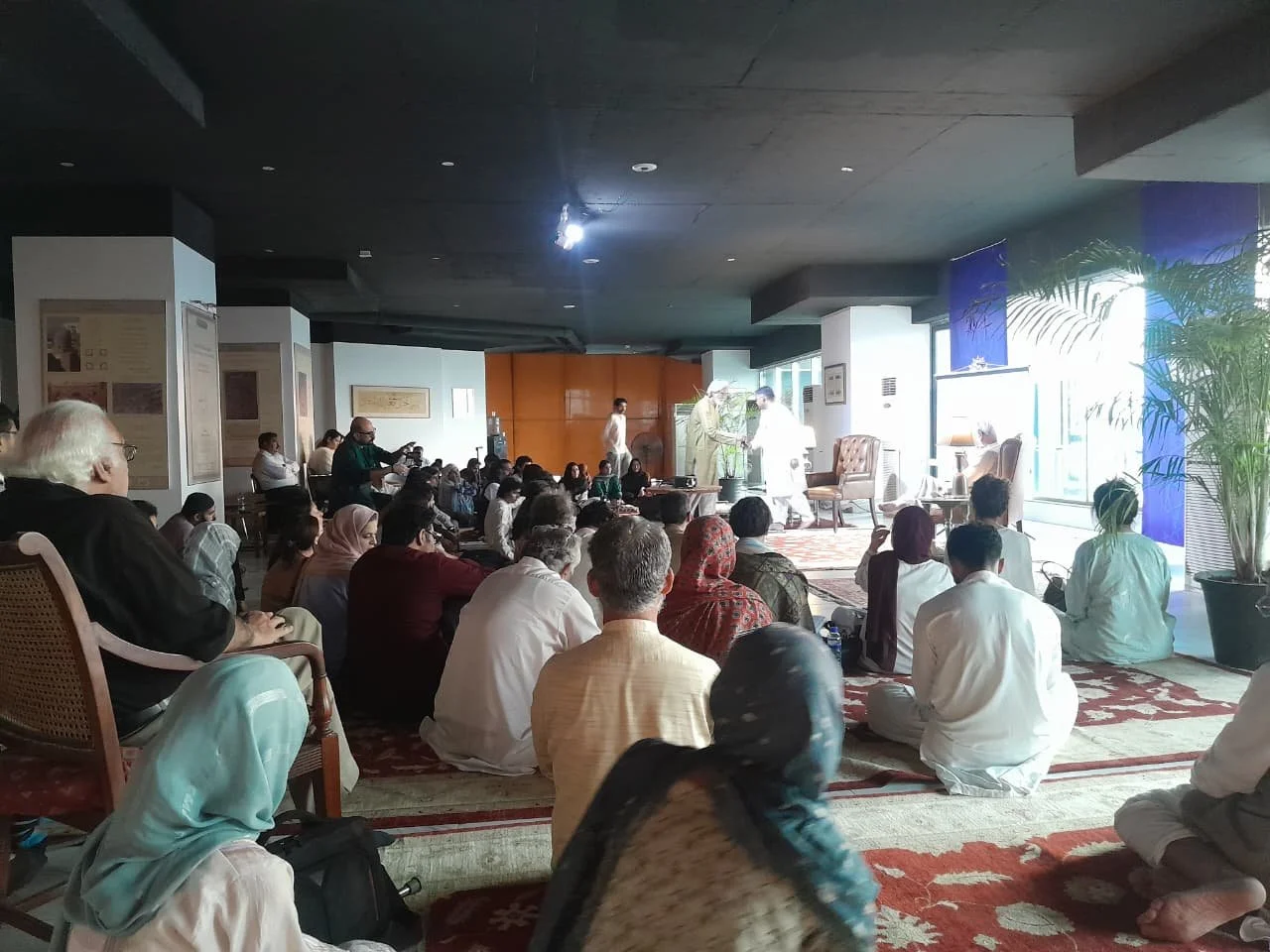
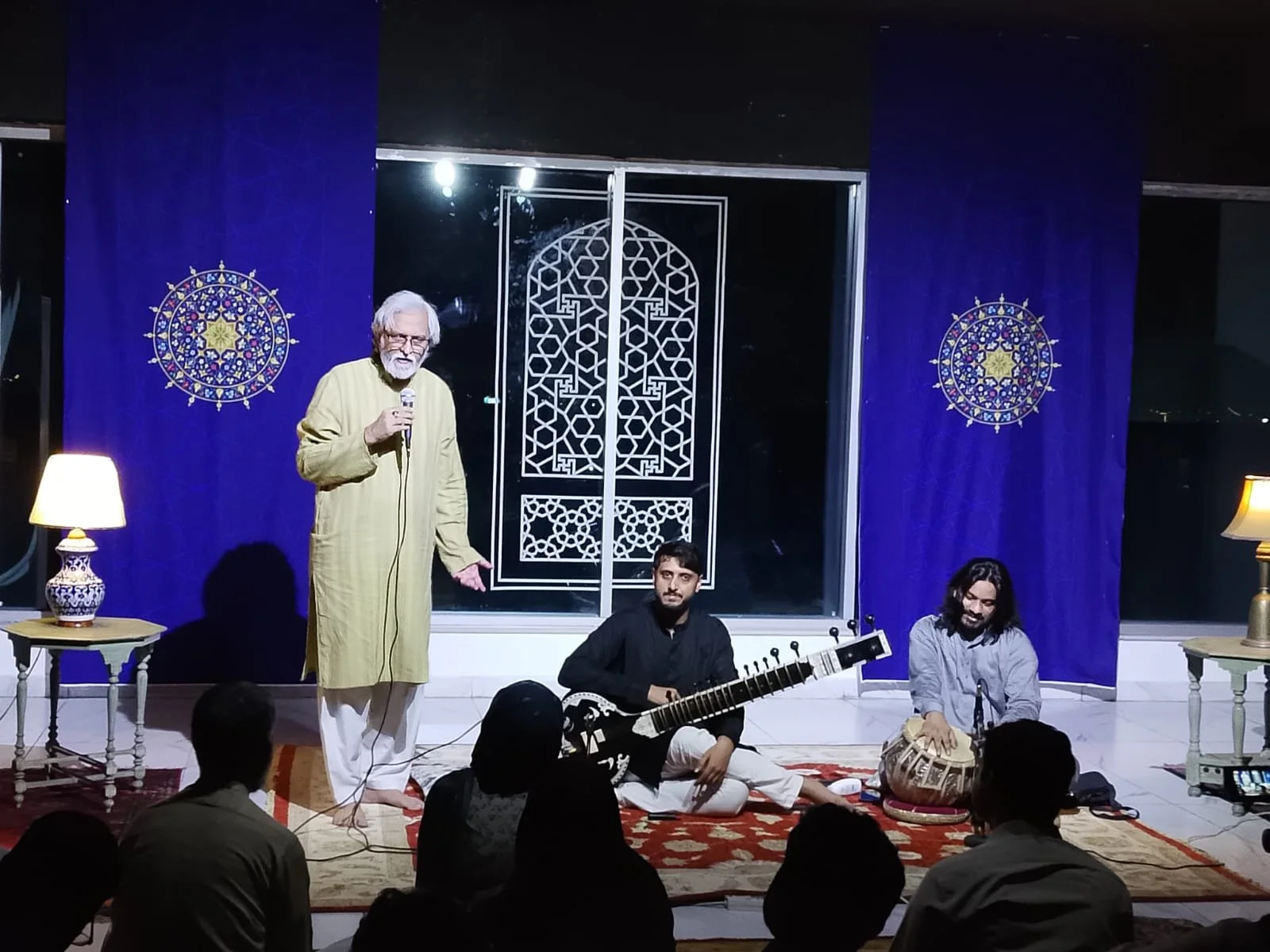
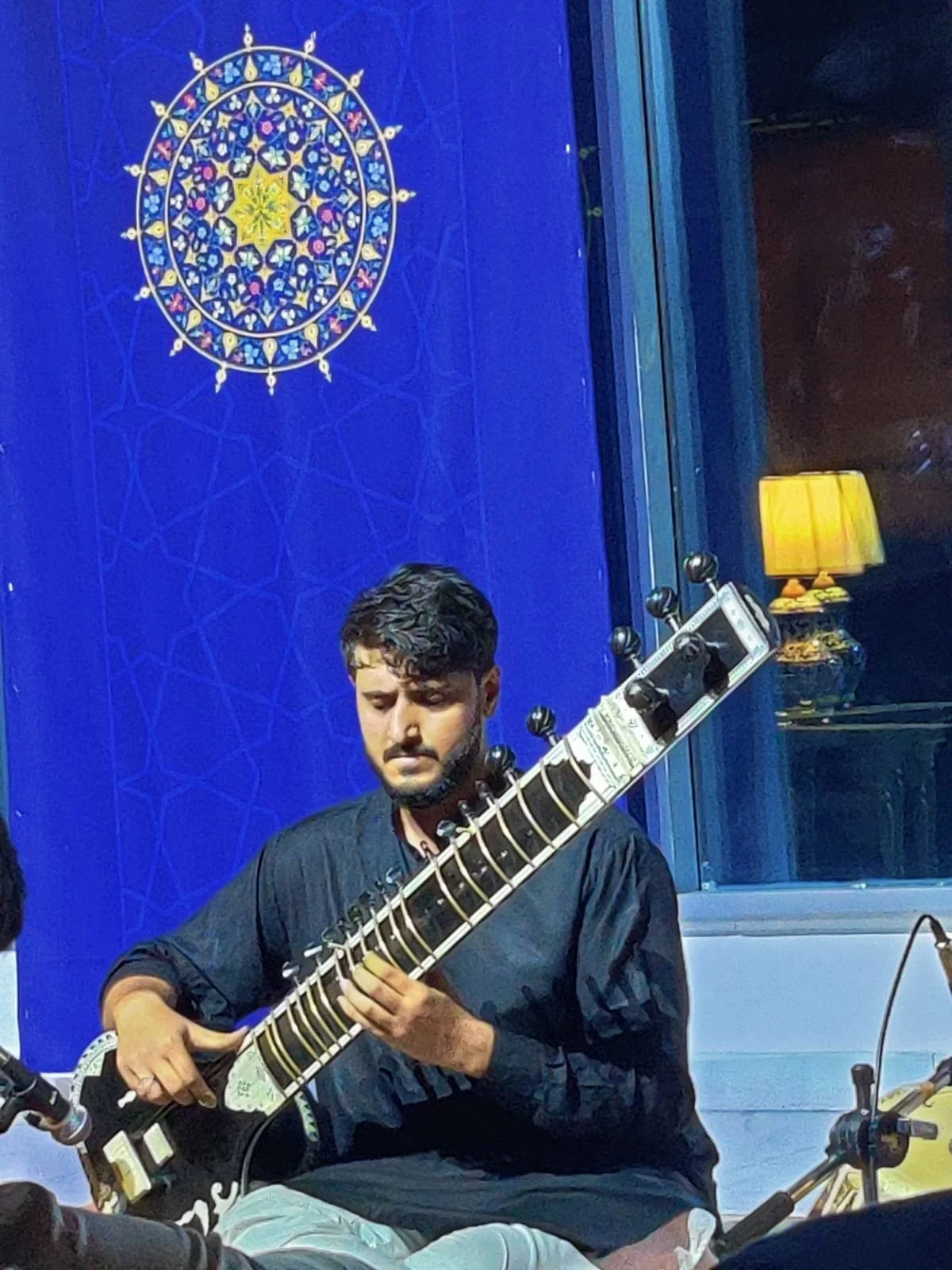
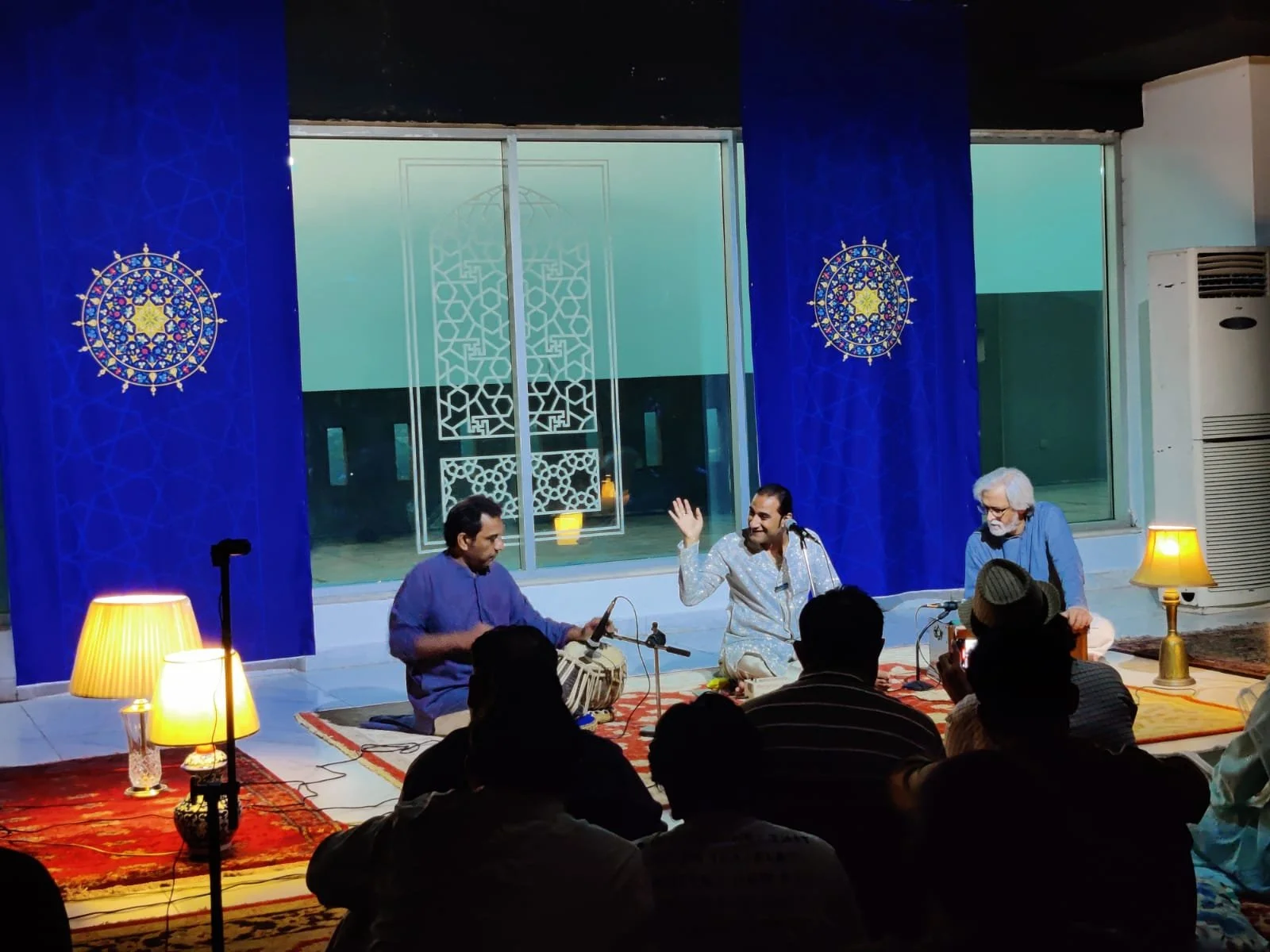
Social Institutions Symposium 2026 مجالسِ مباحثہ ۲۰۲۶
‘The World We Used to Know & the World We Wish to Inhabit.’
The Subcontinent has seen a sea-change in social institutions over the last two hundred years or so – primarily as a result of colonization and its post-colonial aftermath.
We propose to describe this transformation as ‘Rupture of Tradition’ which replaced or co-opted, Traditional Institutions of Governance, Commerce, Land, Home, Education, Professions and Trades into new Colonial ‘formations’ rooted in Post-Enlightenment humanist philosophies.
At the same time many of the traditional institutions continued in various degrees of marginalization and/or modification.
Social Institutions Symposium 2026 مجالسِ مباحثہ ۲۰۲۶
A Gathering to Re-evaluate & Re-think Our Social Institutions.
The Symposium seeks to address four themes:
i. Land As Environment
ii. Economics
iii. Law
iv. Education
Format: Presentations on Pre-Colonial, Colonial & Present-Era followed by Panel Discussion on Possible Futures
Presentations:
a) To look at the precolonial formations of social institutions.
b) To look at the ways in which ‘Rupture of Tradition’ took place via the imposition of new formations of social institutions in the colonial period.
c) Take stock of the current state of both mainstream and traditional institutions in Pakistani society, with the aim of uncovering the roots of the institutional decay which is part and parcel of the ‘Pakistan Experience’ and show possible strategies, role-models and actions required for stemming this decay.
Moderated Panel Discussion:
d) Discuss possible strategies, role-models and actions required for stemming this decay and envisioning possible futures.
3-Day Symposium Program
18-19-20th September, 2026 - 14th Floor, High Q Tower, Jail Road, Gulberg V, Lahore.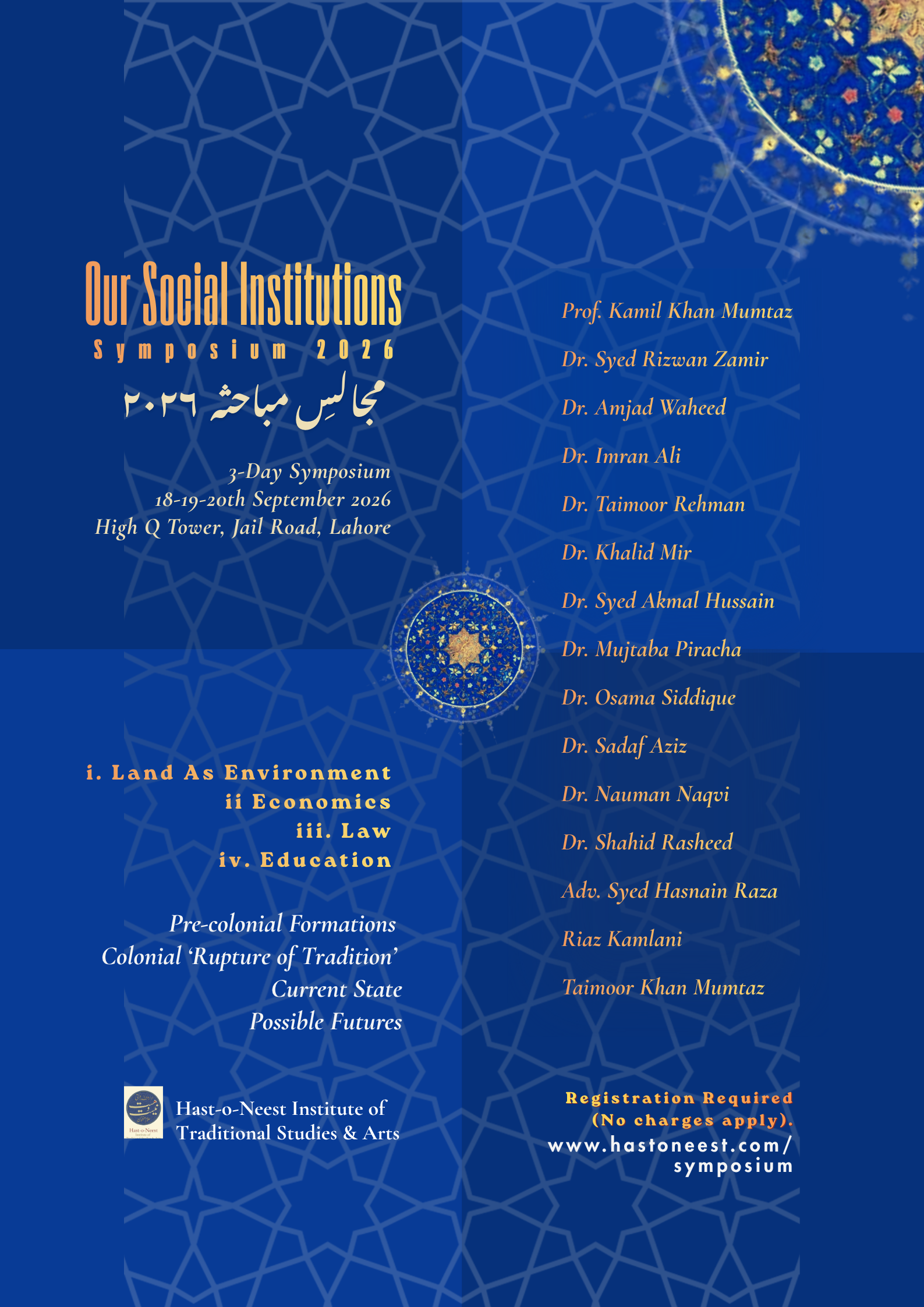
-
1st Symposium on Social Institutions 2026
‘The World We Used to Know & the World We Wish to Inhabit’
A Gathering to Re-evaluate & Re-think our Social Institutions
The Subcontinent has seen a sea-change in social institutions over the last two hundred years or so – primarily as a result of colonization and its post-colonial aftermath.
We propose to describe this transformation as ‘Rupture of Tradition’ which replaced or co-opted, Traditional institutions of Governance, Commerce, Land, Home, Education, Professions and Trades into new Colonial ‘formations’ rooted in Post-Enlightenment humanist philosophies.
At the same time many of the traditional institutions continued in various degrees of marginalization and/or modification.
-
3-Days
Day-01: Friday 18th September: (Evening Only) Keynote Address and Panel Discussion - 5:00 to 6:00 pm followed by sitar recital by Muhammad Effendi from 6:00 to 7:30 pm.
Day 02: Saturday 19th September (Morning & Afternoon)
i) Symposium: Land As Environment 10:30 am to 12:30 pm
ii) Symposium: Economics 2:45 to 4:45 pm
Day 03: Sunday 20th September (Morning & Afternoon)
iii) Symposium: Law 10:30 am to 12:30 pm
iv) Symposium: Education 2:45 to 4:45 pm
Santoor Recital by Ali Raza 5:45 – 7:00 pm
-
The Inaugural Symposium proposes to address four themes:
i. Land As Environment
ii Economics
iii. Law
iv. Education
The proposed Series of Symposiums seeks to:
Presentations:
a) To look at the precolonial formations of social institutions.
b) To look at the ways in which ‘Rupture of Tradition’ took place via the imposition of new formations of social institutions in the colonial period.
c) Take stock of the current state of both mainstream and traditional institutions in Pakistani society, with the aim of uncovering the roots of the institutional decay which is part and parcel of the ‘Pakistan Experience’.
Moderated Panel Discussion
d) Discuss possible strategies, role-models and actions required for stemming this decay and envisioning possible futures.
Format: Presentations on Pre-Colonial, Colonial & Present-Era followed by Panel Discussion on Possible Futures
-
Speakers (& Moderators)
Kamil Khan Mumtaz | Kamil Khan Mumtaz is a famous Pakistani architect, artist and writer based in Lahore, where he was born and bought up. He received training in 1957 at the Architectural Association in London, and in 1966 he returned to Pakistan to practice and train more. His name is synonymous with architecture and tradition, and he is well renowned for supporting environmental protection and heritage preservation. From 1966 to 1975, Kamil Khan Mumtaz was president of the National College of Arts in Lahore.
Dr. Syed Rizwan Zamir | Dr. Syed Rizwan Zamir, Chair & Associate Professor of Religious Studies, Davidson College USA holds a PhD from the University of Virginia and bachelor degrees from both the University of Punjab and James Madison University. He is on the Board for Society for the Study of Muslim Ethics (SSME) and is vice president-elect of the American Academy of Religion’s Southeast region (SECSOR). He has developed and taught numerous courses in Islamic and religious studies, including introductory surveys of Islamic life and thought, a comparative study of Sunni and Shiite traditions, Islamic eschatology, and encounters of Islamic civilization with Western modernity.
Taimoor Khan Mumtaz | Taimoor Khan Mumtaz is a Senior Architect at Kamil Khan Mumtaz Architects, with over two decades of experience in design grounded in both traditional and contemporary South Asian architecture. He holds an MA in South Asian Design & Architecture from De Montfort University, Leicester, UK (1999) and a Bachelor of Architecture from the National College of Arts, Lahore (1994).
Taimoor is also the Founding Director of Hast-o-Neest Institute of Traditional Studies & Arts in Lahore.Dr. Amjad Waheed | Dr. Amjad Waheed | Ph.D Islamic Civilization, University of Punjab; Former-Director School of Advanced Studies, University of Management & Technology (UMT), Lahore; Director, Project Dalan, Dipalpur
Dr. Imran Ali | Imran Ali has been Rector and Dean, and Professor of Business Policy, Karachi School for Business & Leadership. Previously he taught Economic History and Business Policy at the Lahore University of Management Sciences, Pakistan. He is author of The Punjab Under Imperialism, 1885-1947. He has taught economic history at the New South Wales and Melbourne Universities in Australia, and he has been a visiting scholar at several universities in Australia, the UK, and North America. His recent work has been on Pakistan’s political economy.
Dr. Taimur Rehman | Dr. Taimur Rahman, Associate Professor, has been teaching political science at LUMS since 2002. He is also the spokesperson for the band Laal and a grassroots political activist.
Dr. Khalid Mir | Khalid Mir, Associate Professor at LUMS, did his PhD from The University of Essex with a focus on child labour. He has an MSc from The London School of Economics and Political Science. His current research interests lie primarily in child labour and globalisation, the political economy of development- in particular: the role of institutions in the transformation to market societies and the effects on social capital. He taught Public Economics and Development Theory at LUMS from 2003-2004, and Development Studies at Birkbeck (Faculty of Continuing Education) from 2005-2006. Among his core teaching interests are topics in the philosophy of economics with a special focus on theories of justice.
Dr. Syed Akmal Hussain | Dr. Akmal Hussain, Distinguished Professor, School of Management Sciences (SMS) BNU, is a renowned economist who specializes in economic policy, development, and sustainability. He has advised Pakistani governments and contributed to global Sustainable Development Goals. With a PhD from the University of Sussex and degrees from Cambridge, he is recognized for his policy discussions, research, and advocacy for inclusive, sustainable development.
Dr. Sadaf Aziz | Dr. Sadaf Aziz, Dean & Associate Professor, SAHSOL, LUMS, joined the Department of Law and Policy as an Assistant Professor and was amongst the small cohort of faculty who launched the BA-LL.B. program here. She designed the first labour law and jurisprudence courses for the program and pioneered field research-based courses such as law and social justice. She completed her PhD in Law from the University of Melbourne in 2020. Dr. Aziz’s research interests are in the areas of legal and political theory and the comparative and historical study of legal regimes in the subcontinent.
Dr. Osama Siddique | MA, University of Oxford - is a legal scholar, policy reform advisor and author. He has also worked as an Associate Professor of Law & Policy and was the founding head of department (2005-2007) at Lahore University of Management Sciences (LUMS), Lahore, Pakistan. Dr. Siddique has extensive experience in research and policy work in the fields of law and public policy. He has several scholarly publications in international academic journals in the areas of comparative constitutional law, law and development, legal history, human rights, legal education, and justice sector reform.
Advocate Syed Muhammad Hasnain Raza | MSc.Economics from Quaid e Azam University Islamabad; LLB from Pakistan College of affiliated with the University of Punjab. Professional experience: Practicing lawyer: specialty in Constitutional Law, Commercial Law, Law and Economics and Comparative Laws.
Dr. Nauman Naqvi | Dr Nauman Naqvi is a Founding Faculty at Habib University. He received his PhD in Anthropology from Columbia University, though his thought and work are interdisciplinary – ranging across anthropology, history, literature and philosophy.
Riaz Kamlani | Riaz Ahmed Kamlani, Chief Operating Officer (COO), The Citizens Foundation,
Riaz has been a part of TCF for the past 17 years. Prior to the non-profit sector, he served in senior management roles with Shell International in Pakistan, United Kingdom, South Africa and the UAE. He also served as the Chairperson for Punjab Examination Commission as a nominee of TCF. Riaz’s academic qualifications include an MSc in Development Management from the Open University in United Kingdom and a BBA & MBA from The Institute of Business Administration, Karachi.
Dr. M.Mujtaba Piracha | Dr Muhammad Mujtaba Piracha is formerly Pakistan’s Ambassador/ Permanent Representative to the World Trade Organisation (WTO) at Geneva. He previously worked as Commissioner Lahore Division and Administrator of the Municipal Corporation of Lahore, Pakistan. He has also worked on China Pakistan Economic Corridor as Secretary Industries, Commerce and Investment Department, Government Of Punjab, Pakistan. He holds a PhD from IDS, Sussex Uni, UK and graduated from the London School of Economics.
Dr. Shahid Rasheed | Dr. Shahid Rasheed is the founding Director of Zaawiya Trust School. His PhD research is related to responses of Muslim South Asia to political modernity. Currently teaching Sociology at Forman Christian College Lahore. He holds an M.Sc Sociology, University of Oxford. His interests: Sociological theory, Islam and Modernity, South Asian Islam, Sufism; Arabic Persian, German, and Sanskrit.
-
Day-01: Friday 18th September 5:00 to 6:00pm
Qira’at & Na’at
Introduction: Taimoor Khan Mumtaz -15 mins
Keynote Address: Prof. Kamil Khan Mumtaz -15 mins
Panel Discussion: Dr. Rizwan Zamir, Taimoor & Prof. Kamil Khan Mumtaz -30 mins
Tea 6:00 pm
Sitar Recital M. Effendi (Hast-o-Neest Sitar Ustad) 6:30 pm
Langar 7:30 pm
-
Day 02: Saturday 19th September
i) Symposium: Land As Environment 10:30 am to 12:30 pm
1. Pre-colonial Relationship with Land – Daula Pukhta, a Case-study
Dr. Amjad Waheed -15 mins
2. Lahore Masterplan 2050 - a Case-Study
Kamil Khan Mumtaz -15 mins
3. Colonial Rupture – The Case of Canal Colonies of the Punjab
Dr. Imran Ali -15 mins
Panel Discussion - Repairing the Rupture - 30 minutes
Q&A - 20 minutes
Moderator: Dr. M. Mujtaba Piracha
Lunch & Zuhr: 1:00 to 2:30 pm
ii) Symposium: Economics 2:45 to 4:45 pm
1. Principles & Nature of Pre-Colonial Economy – 15 minutes
Dr. Taimur Rehman
2. Economics & Its Ontologies – 15 minutes
Dr. Khalid Mir
3. An Economy for the People & Heart-Consciousness – 15 minutes
Dr. Syed Akmal Hussain
Panel Discussion - Repairing the Rupture - 30 minutes
Q&A - 20 minutes
Moderator: Dr. M. Mujtaba Piracha
Tea 5:00 pm
Special Documentary Viewing: 5:30 to 6:30 pm
Schooling the World (Carol Black, 2010, 1h 6m)
Schooling the World takes a challenging look at the effects of modern education on the world’s last sustainable indigenous cultures. If you wanted to change an ancient culture in a generation, how would you do it? You would change the way it educates its children.
Today, volunteers build schools in traditional societies around the world, convinced that school is the only way to a ‘better’ life for indigenous children. But is this true? What really happens when we replace a traditional culture’s way of learning and understanding the world with our own?
-
Day 03: Sun 20th Sept
iii) Symposium: Law 10:30 am to 12:30 pm
1. Practice of Law in Pre-colonial Times – 15 minutes
Adv. Syed Hasnain Raza
2. Alien Law Applied to a Traditional Society – 15 minutes
Dr. Osama Siddique
3. State of Pakistan’s Constitution Today – 15 minutes
Dr. Sadaf Aziz
Panel Discussion - Repairing the Rupture - 30 minutes
Q&A - 20 minutes
Moderator: Adv. Syed Hasnain Raza
Lunch & Zuhr: 1:00 to 2:30
iv) Symposium: Education 2:45 to 4:45 pm
1. Pre-modern Education – Firangi Mahal – 15 minutes
Dr. Amjad Waheed
2. Colonial Paradigm of Education & Its Continuing Influence Today – 15 minutes
Dr. Nauman Naqvi
3. State of Pakistan’s Education Today – The Case of TCF – 15 minutes
Riaz Kamlani
Panel Discussion - Repairing the Rupture - 30 minutes
Q&A - 20 minutes
Moderator: Dr. Shahid Rasheed
Tea 5:00 pm
Santoor Recital by Ali Raza 5:45 – 7:00 pm
-
Registration Procedure:
Registrations is necessary to attend the 3-Day Symposium. No charges apply. Free.
It is open for all. Students are encouraged to register.
Limited seats due to space restriction,
To Register:
Fill out the form on the registration link and send it latest by 15th September 2026. REGISTRATION LINK
A unique registration number will be issued via whatsapp to those who send the form. This unique registration number is to be presented at the entrance of the venue.
ONLY those assigned a registration number will be permitted to attend any event of the 3-Day Symposium.
Other details as program pdf file, venue location, timings will be sent via Whatsapp to participants.
Thankyou!
-
Note: All recorded proceedings of the 3-Day Symposium are collected in one YouTube playlist - which can be shared or archived. Thank you.
Symposium Recordings | Save the YouTube Playlist Link: https://bit.ly/4ARZ3j9
ہم، ہمارے ادارے، ہمارا معاشرہ، ہماری سوچ | Our Social Institutions Symposium 2026 | مجالسِ مباحثہ ۲۰۲۶ |‘The World We Used to Know & the World We Wish to Inhabit' | 18-19-20th September 2026, High Q Tower, Lahore.
www.hastoneest.com/symposium Hast-o-Neest Institute of Traditional Studies & Arts
-
Hast-o-Neest is grateful to and would like to acknowledge:
The team at High Q Tower for all their support, co-operation and assistance, Hast-o-Neest staff and volunteers, and all the esteemed speakers for making the effort meaningful, especially Dr. M.Mujtaba Piracha, Syed Muhammad Hasnain Raza and Dr. Syed Rizwan Zamir.
Day One - 5:00 to 6:00pmDay 1 -18th Sept 2026
Keynote Address: Prof. Kamil Khan Mumtaz
Taimoor Khan Mumtaz
IntroductionTea/Dinner-LangarSitar Recital - Muhammad Effendi
15 minutes
Dr. Syed Rizwan Zamir, Taimoor Khan Mumtaz & Prof. Kamil Khan Mumtaz
Panel Discussion & Q&A30 minutes
15 minutes
Day 2 - 19th Sept: (i) Land as Environment
Day Two - Session 01Land As Environment - 10:30 am to 12:30 pm
Pre-Colonial Relationship with LandDaula Pukhta, a Case-Study - Dr. Amjad Waheed (15 minutes)
Lahore Masterplan 2050 - a Case-Study - Kamil Khan Mumtaz (15 minutes)
Current StateThe Case of Canal Colonies of the Punjab - Dr. Imran Ali (15 minutes)
Colonial 'Rupture'Repairing the Rupture (30 minutes & 20 minutes)Moderator: Dr. M. Mujtaba Piracha
Panel Discussion - Q&A
Day 2 - Session 02
Day 2 - 19th Sept: (ii) Economics
Economics - 2:45 to 4:45 pm
Principles & Nature of Pre-Colonial Economy - Dr. Taimur Rehman (15 minutes)
Pre-ColonialEconomics & Its Ontologies - Dr. Khalid Mir (15 minutes)
Colonial 'Rupture'Documentary Viewing 5:30 pm
Schooling the World (Carol Black, 1h 6 m)
An Economy for the People: Heart-Consciousness - Dr. Syed Akmal Hussain (15 minutes)
Current StateRepairing the Rupture (30 minutes & 20 minutes)
Moderator: Dr. M. Mujtaba Piracha
Panel Discussion - Q&A
Day 3 - 20th Sept: (iii) Law
Day Three - Session 01Law - 10:30 am to 12:30 pm
Practice of Law in Pre-Colonial Times - Adv. Syed Hasnain Raza (15 minutes)
Pre-ColonialAlien Law Applied to a Traditional Society - Dr. Osama Siddique (15 minutes)
Colonial 'Rupture'State of Pakistan’s Constitution Today - Dr. Sadaf Aziz (15 minutes)
Current StateRepairing the Rupture - Moderator: Adv. Syed Hasnain Raza (30 minutes & 15 minutes)Panel Discussion & Q&ADay 3 - 20th Sept: (iv) Education
Day Three - Session 02Education - 2:45 to 4:45 pm
Pre-Modern Education – Firangi Mahal - Dr. Amjad Waheed
Pre-ColonialSantoor Recital by Ali Raza5:45 – 7:00 pm
Colonial Paradigm of Education & Its Continuing Influence Today - Dr. Nauman Naqvi
Colonial 'Rupture'State of Pakistan’s Education Today – The Case of TCF - Riaz Kamlani
Current StateRepairing the Rupture - Moderator: Dr. Shahid Rasheed
Panel Discussion - Q&ASchooling the World
A Documentary by Carol Black (2010, 1h 6m)
(دستاویزی فلم - کیرول بلیک 2010 )
اسکول کی تعلیم یا روایتی تعلیمی مراکز
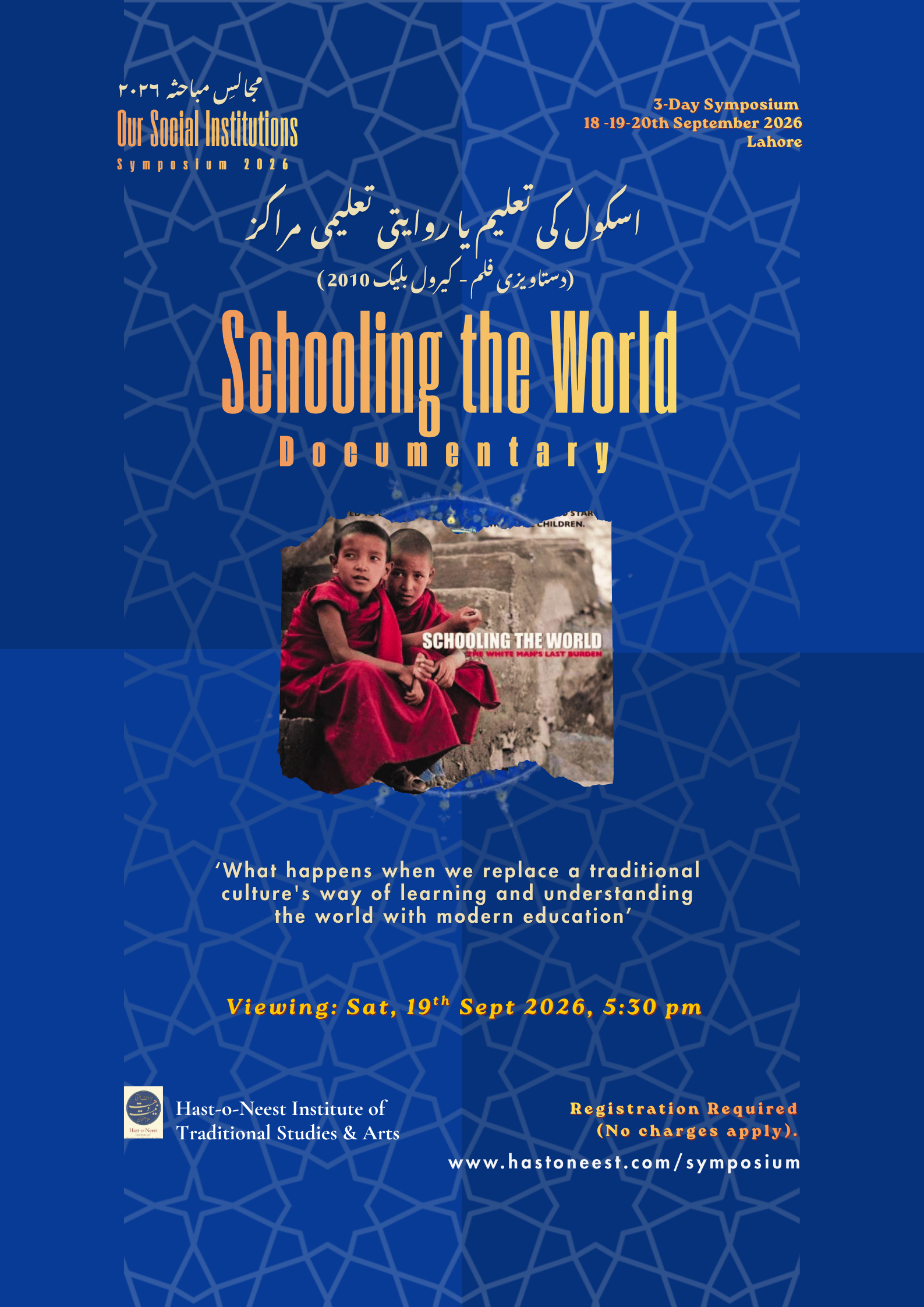
‘What happens when we replace a traditional culture's way of learning and understanding the world with modern education’
Speakers
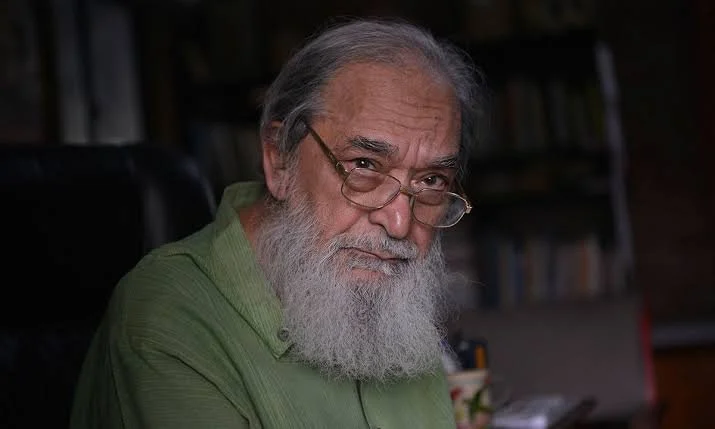
Kamil Khan Mumtaz
Keynote; Land as EnvironmentKamil Khan Mumtaz is a famous Pakistani architect, artist and writer based in Lahore, where he was born and bought up. He received training in 1957 at the Architectural Association in London, and in 1966 he returned to Pakistan to practice and train more. His name is synonymous with architecture and tradition, and he is well renowned for supporting environmental protection and heritage preservation. From 1966 to 1975, Kamil Khan Mumtaz was president of the National College of Arts in Lahore.
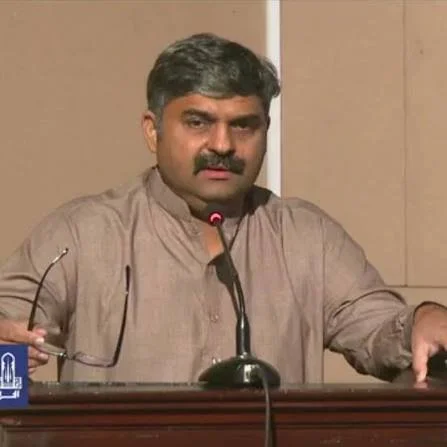
Dr. Amjad Waheed
Land as Environment; EducationDr. Amjad Waheed | Ph.D Islamic Civilization, University of Punjab; Former-Director School of Advanced Studies, University of Management & Technology (UMT), Lahore; Director, Project Dalan, Dipalpur
Dr. Imran Ali
EconomicsImran Ali has been Rector and Dean, and Professor of Business Policy, Karachi School for Business & Leadership. Previously he taught Economic History and Business Policy at the Lahore University of Management Sciences, Pakistan. He is author of The Punjab Under Imperialism, 1885-1947. He has taught economic history at the New South Wales and Melbourne Universities in Australia, and he has been a visiting scholar at several universities in Australia, the UK, and North America. His recent work has been on Pakistan’s political economy.
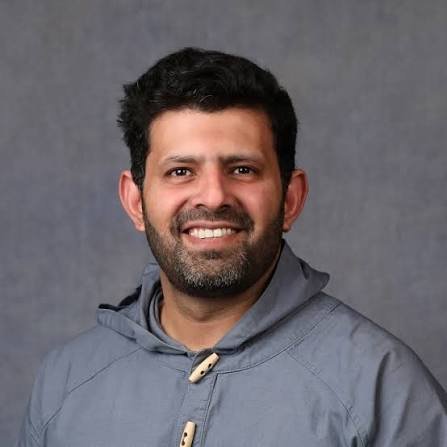
Dr. Syed Rizwan Zamir
Keynote; Land as EnvironmentDr. Syed Rizwan Zamir, Chair & Associate Professor of Religious Studies, Davidson College USA holds a PhD from the University of Virginia and bachelor degrees from both the University of Punjab and James Madison University. He is on the Board for Society for the Study of Muslim Ethics (SSME) and is vice president-elect of the American Academy of Religion’s Southeast region (SECSOR). He has developed and taught numerous courses in Islamic and religious studies, including introductory surveys of Islamic life and thought, a comparative study of Sunni and Shiite traditions, Islamic eschatology, and encounters of Islamic civilization with Western modernity.
Speakers
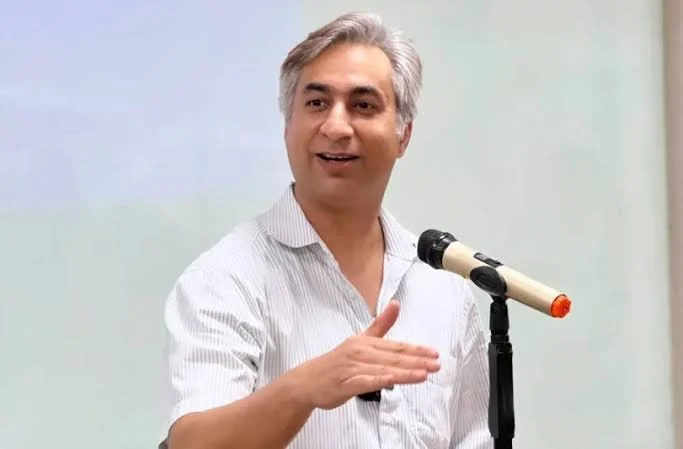
Dr. Taimur Rehman
EconomicsDr. Taimur Rahman, Associate Professor, has been teaching political science at LUMS since 2002. He is also the spokesperson for the band Laal and a grassroots political activist.
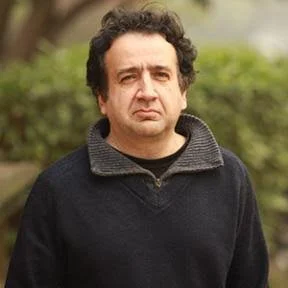
Dr. Khalid Mir
EconomicsKhalid Mir, Associate Professor at LUMS, did his PhD from The University of Essex with a focus on child labour. He has an MSc from The London School of Economics and Political Science. His current research interests lie primarily in child labour and globalisation, the political economy of development- in particular: the role of institutions in the transformation to market societies and the effects on social capital. He taught Public Economics and Development Theory at LUMS from 2003-2004, and Development Studies at Birkbeck (Faculty of Continuing Education) from 2005-2006. Among his core teaching interests are topics in the philosophy of economics with a special focus on theories of justice.
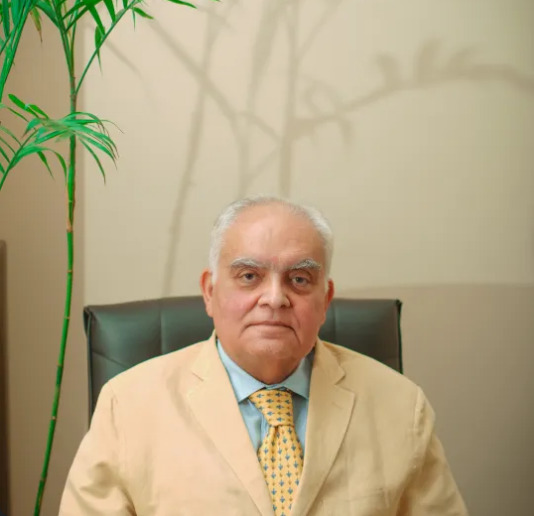
Dr. Syed Akmal Hussain
EconomicsDr. Akmal Hussain, Distinguished Professor, School of Management Sciences (SMS) BNU, is a renowned economist who specializes in economic policy, development, and sustainability. He has advised Pakistani governments and contributed to global Sustainable Development Goals. With a PhD from the University of Sussex and degrees from Cambridge, he is recognized for his policy discussions, research, and advocacy for inclusive, sustainable development.
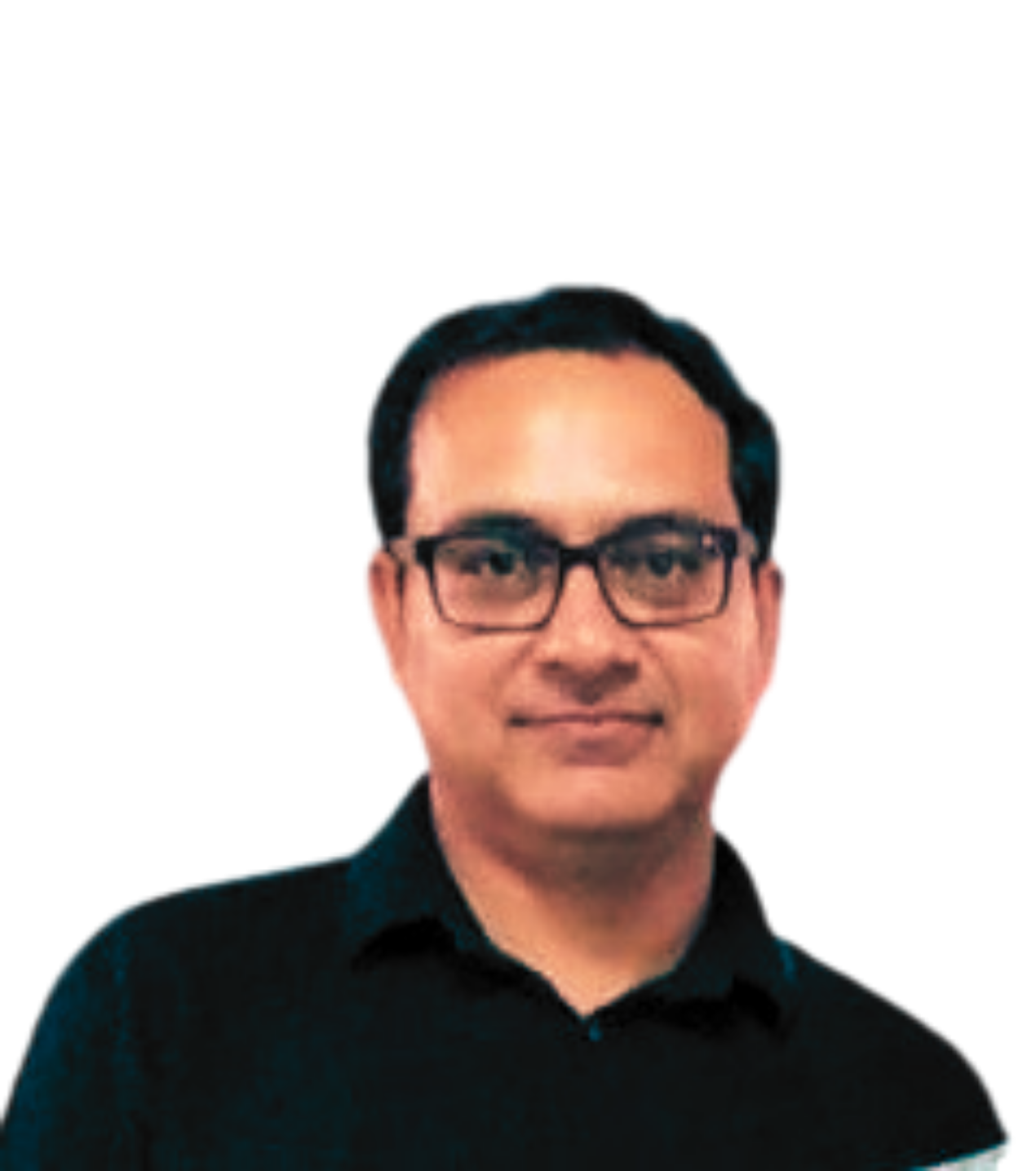
Adv Syed Muhammad Hasnain Raza
LawAdvocate Syed Muhammad Hasnain Raza | MSc.Economics from Quaid e Azam University Islamabad; LLB from Pakistan College of affiliated with the University of Punjab. Professional experience: Practicing lawyer: specialty in Constitutional Law, Commercial Law, Law and Economics and Comparative Laws.
Speakers
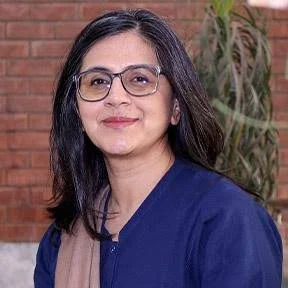
Dr. Sadaf Aziz
LawDr. Sadaf Aziz, Dean & Associate Professor, SAHSOL, LUMS, joined the Department of Law and Policy as an Assistant Professor and was amongst the small cohort of faculty who launched the BA-LL.B. program here. She designed the first labour law and jurisprudence courses for the program and pioneered field research-based courses such as law and social justice. She completed her PhD in Law from the University of Melbourne in 2020.
Dr. Aziz’s research interests are in the areas of legal and political theory and the comparative and historical study of legal regimes in the subcontinent.
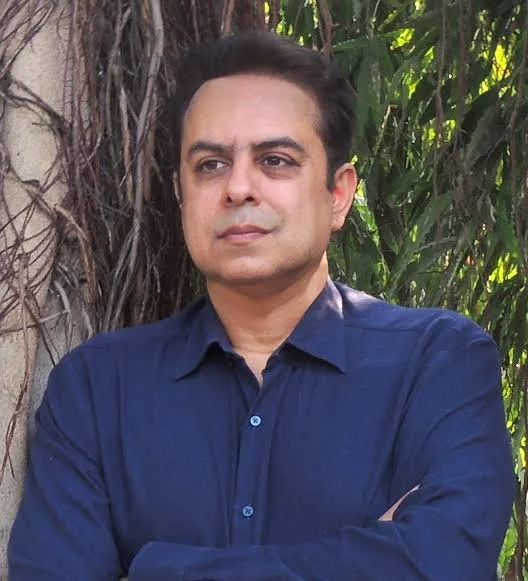
Dr. Osama Siddique
LawDr. Osama Siddique - SJD, Harvard Law School, LL.M, Harvard Law School &
MA, University of Oxford - is a legal scholar, policy reform advisor and author. He has also worked as an Associate Professor of Law & Policy and was the founding head of department (2005-2007) at Lahore University of Management Sciences (LUMS), Lahore, Pakistan. Dr. Siddique has extensive experience in research and policy work in the fields of law and public policy. He has several scholarly publications in international academic journals in the areas of comparative constitutional law, law and development, legal history, human rights, legal education, and justice sector reform.
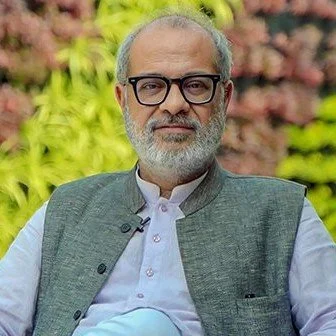
Dr. Nauman Naqvi
EducationDr Nauman Naqvi is a Founding Faculty at Habib University. He received his PhD in Anthropology from Columbia University, though his thought and work are interdisciplinary – ranging across anthropology, history, literature and philosophy.
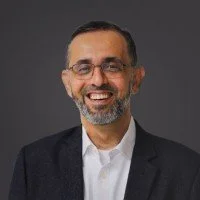
Riaz Kamlani
Riaz Ahmed Kamlani, Chief Operating Officer (COO), The Citizens Foundation,
Riaz has been a part of TCF for the past 17 years. Prior to the non-profit sector, he served in senior management roles with Shell International in Pakistan, United Kingdom, South Africa and the UAE. He also served as the Chairperson for Punjab Examination Commission as a nominee of TCF. Riaz’s academic qualifications include an MSc in Development Management from the Open University in United Kingdom and a BBA & MBA from The Institute of Business Administration, Karachi.
EducationSpeakers-Moderators.
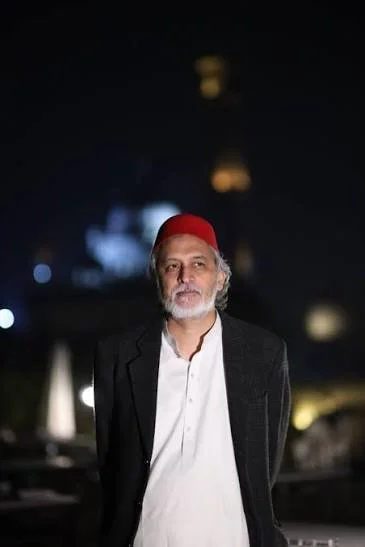
Taimoor Khan Mumtaz
Keynote DiscussionTaimoor Khan Mumtaz is a Senior Architect at Kamil Khan Mumtaz Architects, with over two decades of experience in design grounded in both traditional and contemporary South Asian architecture. He holds an MA in South Asian Design & Architecture from De Montfort University, Leicester, UK (1999) and a Bachelor of Architecture from the National College of Arts, Lahore (1994).
Taimoor is also the Founding Director of Hast-o-Neest Institute of Traditional Studies & Arts in Lahore.
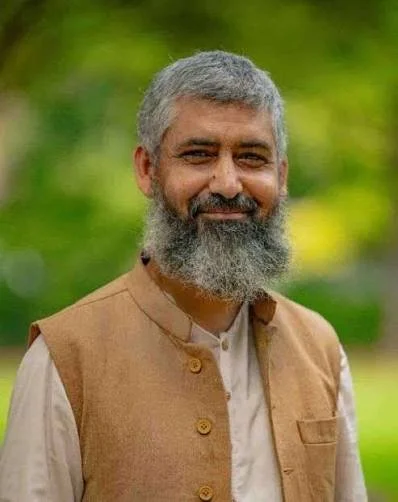
Dr. Shahid Rasheed
Dr. Shahid Rasheed is the founding Director of Zaawiya Trust School. His PhD research is related to responses of Muslim South Asia to political modernity. Currently teaching Sociology at Forman Christian College Lahore. He holds an M.Sc Sociology, University of Oxford. His interests: Sociological theory, Islam and Modernity, South Asian Islam, Sufism; Arabic Persian, German, and Sanskrit.
Moderator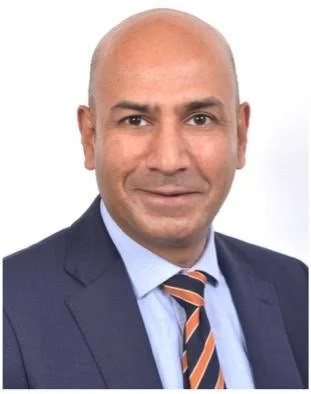
Dr. M. Mujtaba Paracha
Dr Muhammad Mujtaba Piracha is formerly Pakistan’s Ambassador/ Permanent Representative to the World Trade Organisation (WTO) at Geneva. He previously worked as Commissioner Lahore Division and Administrator of the Municipal Corporation of Lahore, Pakistan. He has also worked on China Pakistan Economic Corridor as Secretary Industries, Commerce and Investment Department, Government Of Punjab, Pakistan. He holds a PhD from IDS, Sussex Uni, UK and graduated from the London School of Economics.
ModeratorSocial Institutions 2026: Pakistan.
A Gathering to Re-evaluate & Re-think Our Social Institutions.